
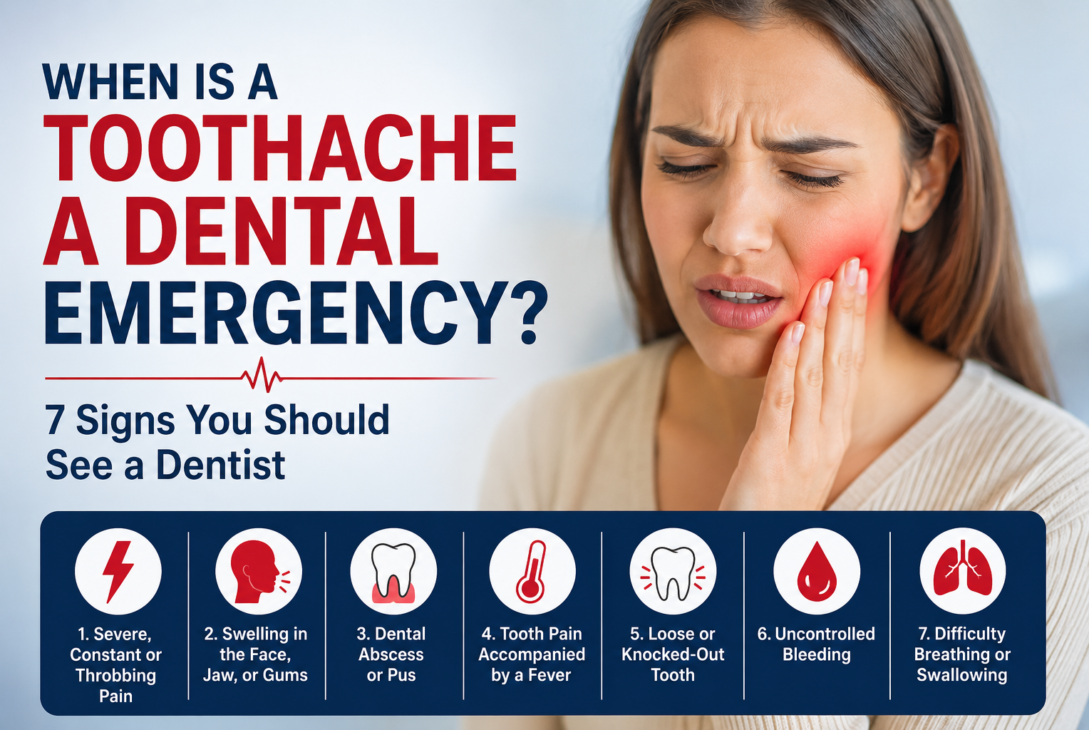
A dull ache after a sugary snack is one thing. But when pain turns sharp, constant, or unbearable, it’s natural to wonder if you’re dealing with a true toothache emergency. Knowing the difference can save your tooth and, in rare cases, protect your overall health.
Not every toothache needs a same-day visit. But some symptoms are your body’s way of waving a red flag, signaling that an infection or injury is progressing fast. Ignoring these warning signs can let a tooth infection spread beyond the tooth itself, sometimes into the jaw, face, or bloodstream.
Below are seven clear signs that your toothache has crossed the line into a dental emergency, plus what to do about it.
1. Severe, Constant, or Throbbing Pain
Mild sensitivity or occasional twinges can often wait a day or two for a regular appointment. But intense, unrelenting throbbing that keeps you up at night or derails your entire day is different.
This level of severe tooth pain usually points to something serious happening deep inside the tooth: nerve damage, an advanced cavity, or an active infection. The nerve is essentially sending a distress signal, and it shouldn’t be ignored.
2. Swelling in the Face, Jaw, or Gums
Puffiness along your cheek, jawline, neck, or gums is rarely just cosmetic. It usually means a bacterial infection has moved beyond the tooth and started affecting the surrounding tissue.
Swollen gums paired with facial swelling call for urgent care, since the infection can continue spreading the longer it’s left untreated.
3. A Dental Abscess or Pus
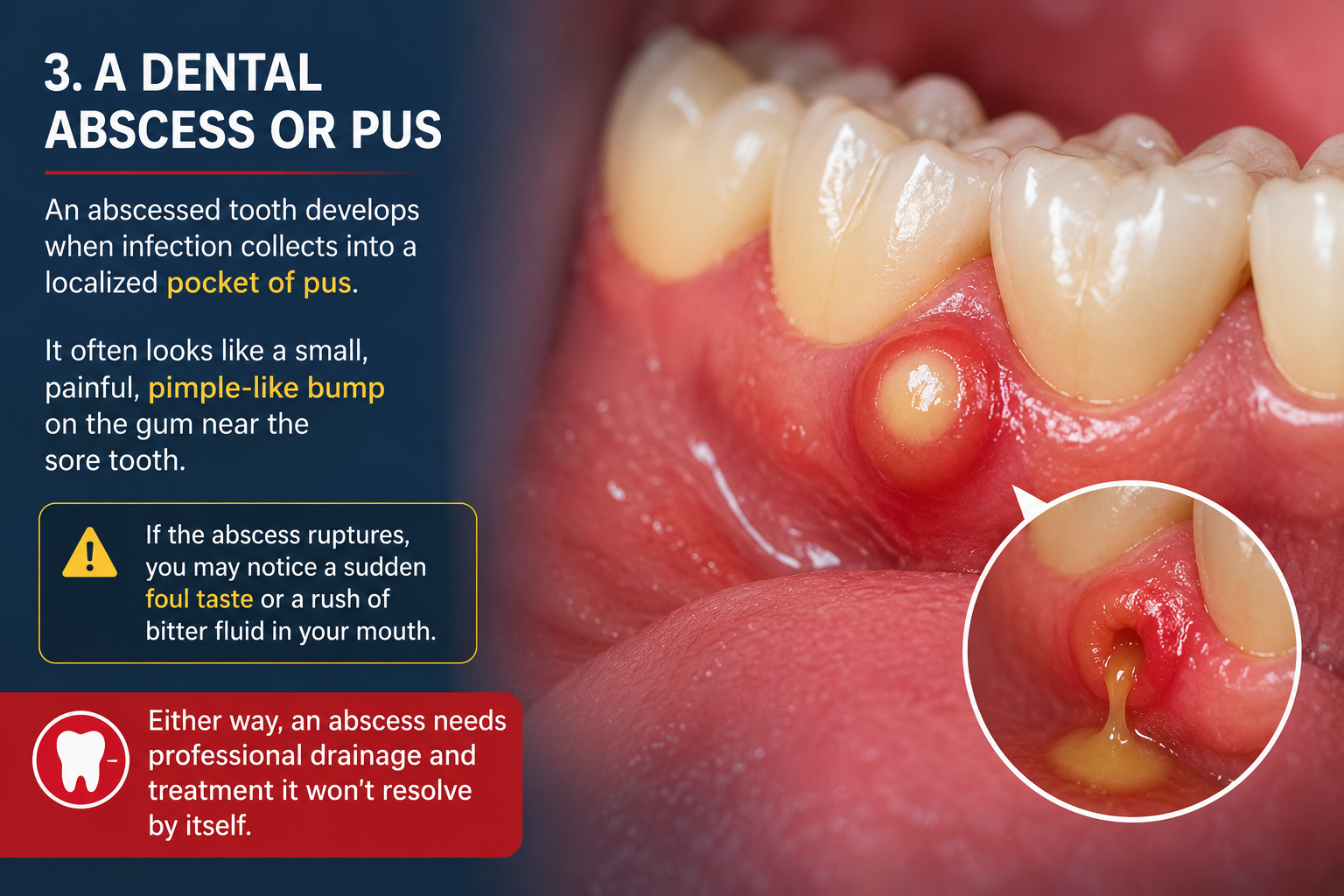
An abscessed tooth develops when infection collects into a localized pocket of pus. It often looks like a small, painful, pimple-like bump on the gum near the sore tooth.
If that abscess ruptures on its own, you may notice a sudden foul taste or a rush of bitter fluid in your mouth. Either way, an abscess needs professional drainage and treatment it won’t resolve by itself.
4. Tooth Pain Accompanied by a Fever
A toothache is usually a local problem. But once a fever joins the picture, your body is signaling a systemic response to infection.
This means the issue is no longer contained to the tooth structure; it’s affecting your whole system. A fever alongside dental pain is one of the clearest reasons to seek same-day care.
5. A Loose or Knocked-Out Tooth
Healthy adult teeth shouldn’t feel loose. If a broken tooth, loose tooth, or a completely knocked-out tooth results from a fall, sports injury, or accident, time is critical.
Acting within 30 to 60 minutes significantly increases the odds that an emergency dentist can save and reattach the natural tooth. Keep the tooth moist (in milk or saliva) and head to care immediately.
6. Uncontrolled Bleeding
A little bleeding while flossing is common and usually harmless. But heavy, persistent bleeding from the gums or a tooth socket, especially following an injury, is not something to wait out.
Apply gentle, steady pressure with clean gauze and seek emergency dental or medical care right away.
7. Difficulty Breathing or Swallowing
This is the most dangerous sign on this list. When swelling from a tooth infection becomes severe enough to restrict your airway or make swallowing difficult, don’t wait for a dental appointment.
Go straight to the nearest hospital emergency room or call 911. This is a medical emergency, not just a dental one.
When to See an Emergency Dentist
So, when should you actually pick up the phone? As a general rule, when to see an emergency dentist comes down to two questions: is the pain unmanageable, and is there a risk of the problem getting worse fast?
If you’re experiencing any of the signs 1 through 6, don’t tough it out. Call an emergency dental clinic right away, even if it means requesting a same-day slot.
If the pain strikes after hours, follow your regular dentist’s emergency protocol, or visit an urgent care center or emergency room equipped to handle dental crises. Many dental offices also list after-hours numbers specifically for situations like these; check your provider’s website or patient portal for details.
For general guidance on recognizing infection symptoms, resources like the American Dental Association and Mayo Clinic offer trustworthy, patient-friendly overviews of oral health emergencies.
Don’t Wait Out a Toothache Emergency
A toothache that lingers is annoying. A toothache emergency is different; it’s your body telling you that time matters. Severe pain, swelling, fever, an abscess, a loose or broken tooth, uncontrolled bleeding, or breathing difficulty are all signs that immediate care isn’t optional.
Acting quickly doesn’t just relieve pain faster; it can be the difference between saving a tooth and losing one, or between a simple treatment and a much more complicated recovery.
If you’re experiencing any of these seven warning signs, don’t wait for your next scheduled cleaning. Contact your dentist’s emergency line today, or find your nearest emergency dental provider now; your smile (and your health) will thank you.