
You just finished a root canal, and now your dentist is talking about a crown. Is it really necessary, or just an upsell?
The short answer: no, you don’t always need a crown after a root canal. But for most teeth, skipping one is a gamble you don’t want to take.
Whether you need a crown after a root canal comes down to two things: which tooth was treated and how much healthy structure is left. Let’s break it down.
Why This Question Matters So Much
A root canal removes the infected nerve and blood supply from inside your tooth. That sounds like the hard part is over, and clinically, it is.
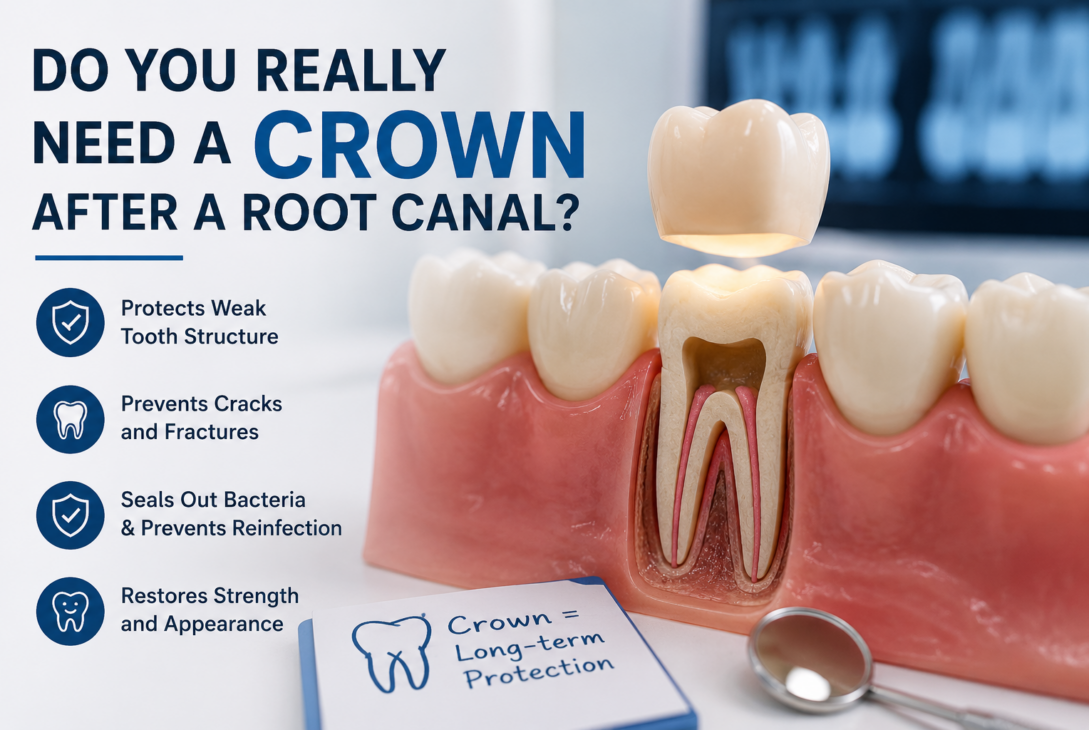
But the tooth left behind is different from before. Without its blood supply, the tooth gradually becomes more brittle and prone to cracking.
That’s the real risk behind root canal tooth fracture. A tooth that survived the infection can still fail later if it isn’t protected properly.
Insurance data backs this up. A striking 85% of root-treated teeth that eventually needed extraction never had a crown or similar protective covering placed on them.
When a Crown Is Essentially Non-Negotiable
For certain teeth, a crown (or a similar restoration like an onlay) isn’t optional. Here’s when dentists insist on it.
Back Teeth (Molars and Premolars)
Your molars and premolars do the heavy lifting every time you chew. They can absorb up to 200 pounds of pressure per square inch during normal biting.
A root-treated back tooth simply can’t handle that kind of force on its own in the long term. Without a crown, it’s only a matter of time before it cracks or splits.
Severely Weakened Teeth
If decay, old fillings, or the access hole from the root canal itself removed more than half of your natural tooth structure, a filling won’t hold up.
The tooth needs full coverage to stay intact under everyday biting and chewing.
Teeth in Patients Who Grind or Clench
If you deal with bruxism, the extra lateral stress on a root-treated tooth raises the risk of fracture significantly. A crown adds a protective layer that a filling simply can’t match.
When You Might Be Able to Skip the Crown
Not every root-treated tooth needs one. So, can you skip a crown after a root canal? Sometimes, yes.
Front Teeth (Incisors and Canines)
Front teeth are built for cutting and tearing food, not grinding. They face far less bite force than your molars.
Minimal Structural Loss
If your dentist only needed a small access opening to clean out the infected nerve, and the rest of the tooth is intact, a composite filling may be enough to seal and restore it.
Your dentist should evaluate this on a tooth-by-tooth basis rather than applying a one-size-fits-all rule, which is also the guidance recommended by the American Association of Endodontists.
Why Dentists Recommend Crowns So Often
It can feel like a sales pitch, but there are three real clinical reasons behind the recommendation.
A crown acts like a helmet. It caps the tooth and spreads chewing force evenly, so the weakened walls don’t take the full impact and snap.
It creates a stronger bacterial seal. Regular fillings expand and contract with hot and cold foods over time, which can let bacteria seep back into the cleaned-out canals. A crown seals the tooth far more reliably against reinfection.
It protects your smile. Root-treated teeth often darken or turn gray over the years. A porcelain or zirconia crown keeps the tooth looking natural.
Root Canal Crown Timing: Don’t Wait Too Long
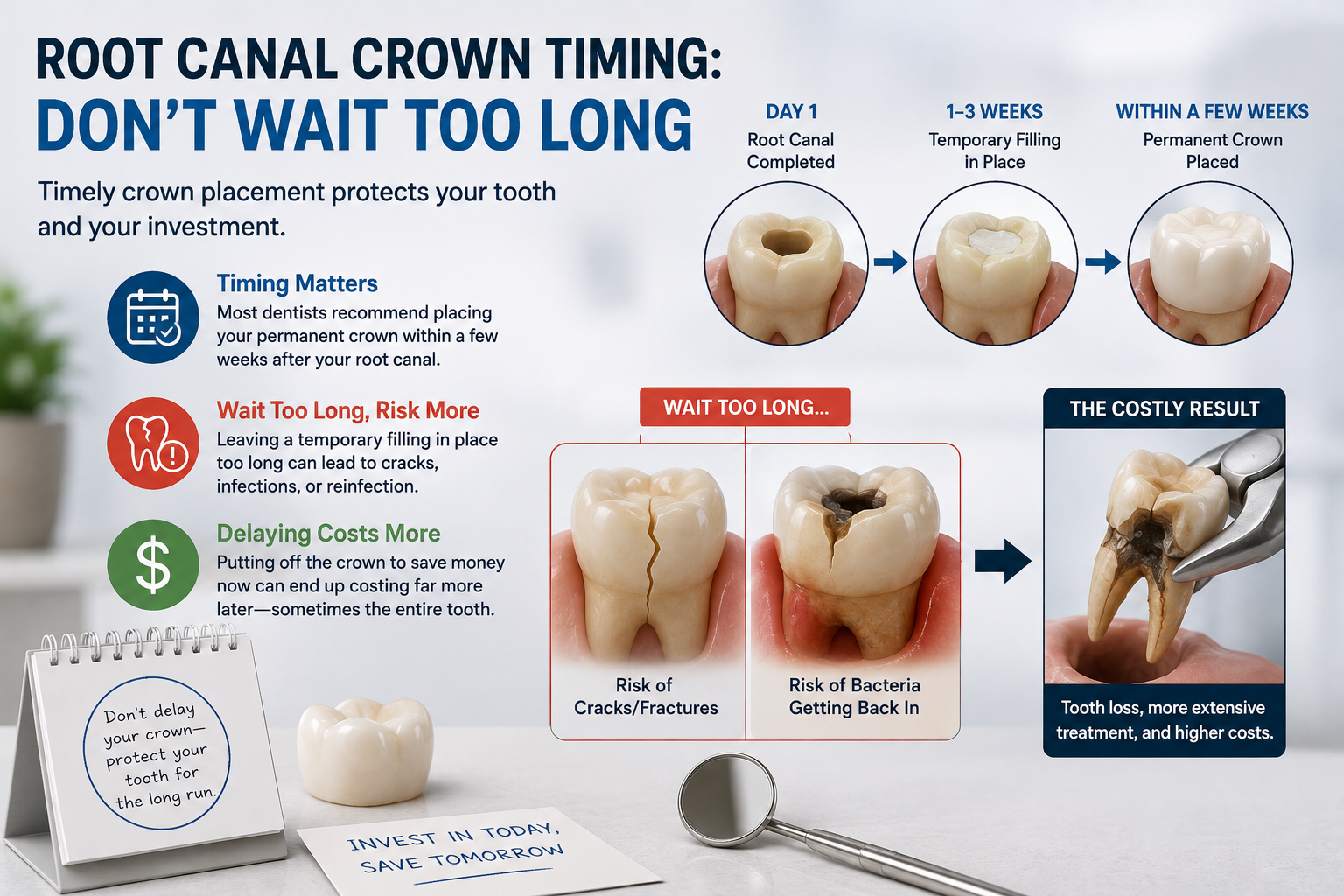
Once your endodontic treatment is finished, timing matters. Most dentists recommend having the permanent crown placed within a few weeks of the root canal.
Leaving a temporary filling in place too long increases your risk of the tooth cracking or bacteria getting back in. If your tooth broke after a root canal, delayed crown placement is often the reason why.
Putting off the crown to save money now can end up costing far more later, sometimes the entire tooth.
Looking for a Root Canal in Houston?
If you’re weighing your options after a root canal, or you’re not sure whether your tooth needs a crown, the best next step is a professional evaluation.
Our Houston dental team can assess your specific tooth, walk you through your restoration options, and help you protect your investment in your smile. Schedule a consultation today to find out what’s right for your tooth.
The Bottom Line
Not every root canal requires a crown, but most back teeth do, and severely weakened or heavily ground-down teeth almost always benefit from one. Front teeth with minimal damage sometimes get by with a filling.
The safest approach is simple: don’t guess. Talk to your dentist about your specific tooth, get a clear recommendation, and don’t delay the final restoration once you decide on a crown.
Your tooth has already survived the hard part. A little protection now goes a long way toward making sure it lasts for years to come.