
Healthy teeth and gums are not just about brushing and flossing daily. Professional dental cleanings are useful for preventing and treating oral health complications before they develop into more severe conditions. The most frequent question patients raise is whether they require a regular cleaning or a more extensive periodontal treatment. The ability to distinguish between dental hygiene cleaning and deep teeth cleaning will enable you to make informed choices about your dental treatment and prevent future complications.
The two procedures are necessary in their own ways, yet they serve different purposes. The selection of the appropriate one would be based on the condition of your gums, the deposits of plaque, and the presence of evidence of gum disease.
What Dental Cleaning Routine is All About
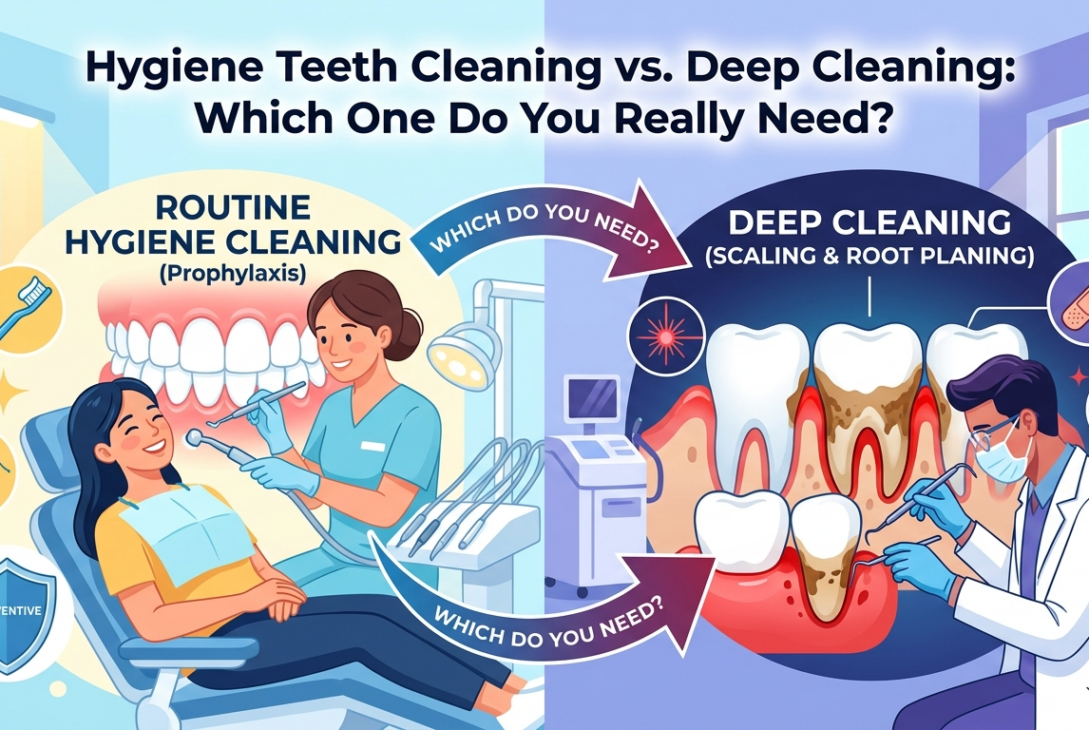
Prophylaxis, also known as routine dental cleaning, is a preventive treatment meant to keep the mouth healthy. It aims to eliminate plaque, tartar, and surface stains on the teeth, particularly in areas that are hard to clean with regular brushing and flossing.
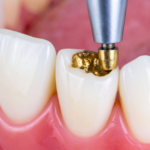
When a dental professional visits a patient for a regular appointment, they use ultrasonic scalers and other specialized hand instruments to clean the area above the gumline and a little below it. It is then polished to expose the smooth enamel, and a fluoride treatment is occasionally applied to strengthen the teeth and prevent cavities.
This kind of cleaning is usually advised every 6 months for those with healthy gums. It is typically a painless process lasting 30-60 minutes, with minimal or no pain; it is an easy procedure to maintain your smile in the right shape.
In Cases Where Deep Cleaning is Required
Deep cleaning, a.k.a. scaling and root planing, is not part of regular maintenance, but it is a cure for gum disease. When plaque and bacteria build up beneath the gumline, forming pockets that harbor infection and cause inflammation, it becomes necessary to address the issue.
This is done by cleaning the roots of the teeth and removing any hard deposits in the deep periodontal pockets. Smoothing of the root surfaces is then performed to assist the gums in reattaching and minimize future bacterial accumulation.
Deep cleaning is more invasive than regular cleaning; hence, local anesthesia is typically used to help patients feel comfortable. It is normally carried out in blocks within the mouth over several operations, particularly when the gum disease is severe.
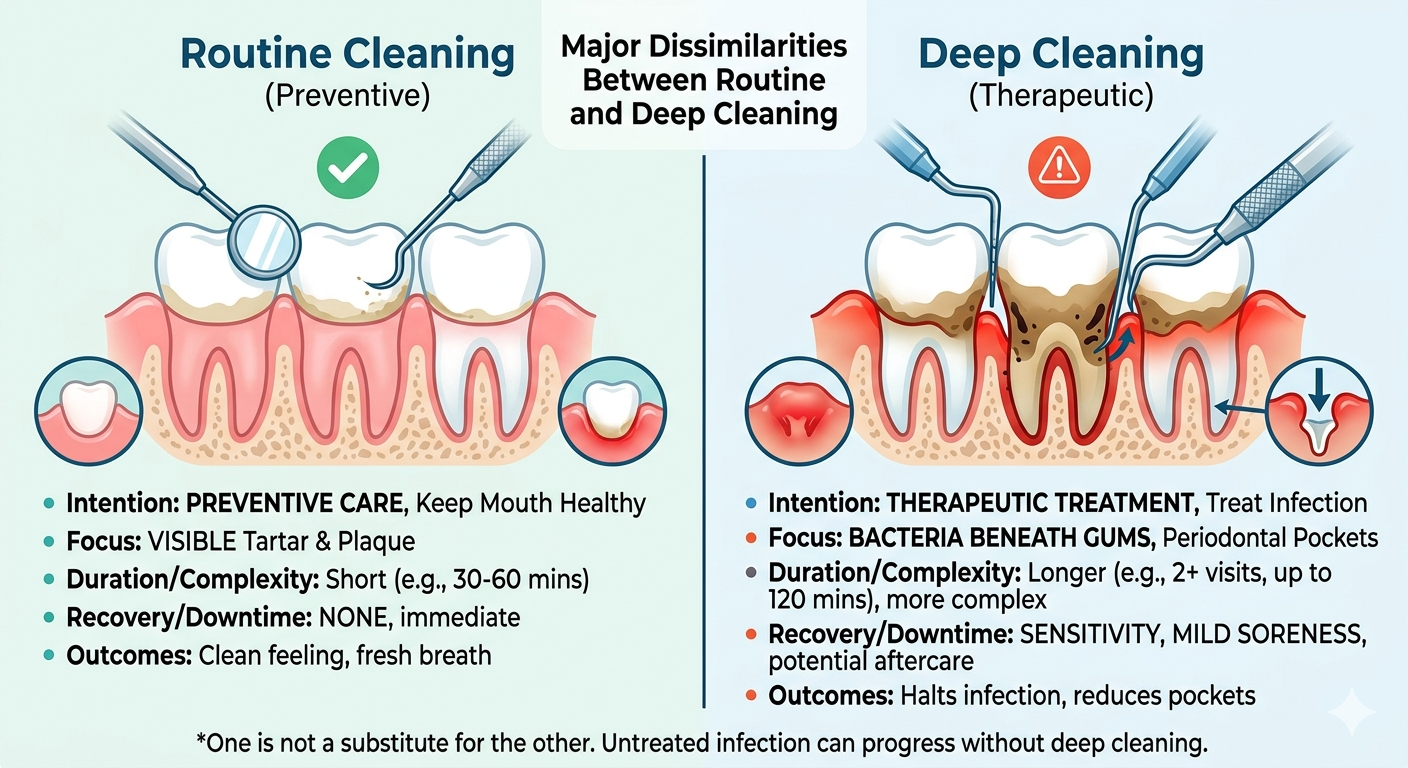
Major Dissimilarities Between Routine and Deep Cleaning
The major distinction between deep and routine cleaning is the intention. Preventive care is provided to keep the mouth healthy and to prevent issues. Deep cleaning, on the other hand, is therapeutic and directed at treating an existing infection.
Normal checkups focus on visible tartar and plaque, whereas deep cleaning targets bacteria beneath the gums. The recovery period, duration, and complexity also differ. Regular cleanings take only a few minutes and do not involve downtime, whereas deep cleanings may require aftercare measures, temporary sensitivity, and mild soreness.
Being aware of these differences would make patients realize that one procedure cannot substitute for the other. In cases of gum disease, the absence of deep cleaning and reliance on regular cleaning may allow the infection to progress.
Red Flags That Mean You Are in Need of Deep Cleaning
Gum disease affects many people without their knowledge, as the signs develop slowly. Nevertheless, some indicators are to be taken into consideration.
Gums bleeding when brushing or flossing, chronic bad breath, swollen or sore gums, gum recession, and loosening of teeth are some signs that there may be a periodontal problem. Dental professionals also assess gum depth during patient examinations. Pockets with a depth of over a few millimeters tend to indicate that a more vigorous cleaning method should be in place.
The main idea is early intervention. Preventing bone loss, tooth mobility, and the need for more complex procedures in the future is possible by treating gum disease in its early stages.
Technology in the Modern World: Making the Process of Dental Cleaning Better
Dental technology has improved, making routine and deep cleaning more efficient and comfortable. Ultrasonic scaling tools currently scrape off tartar with high-frequency vibration; they require less scraping and cause less pain.
Laser-guided procedures are increasingly used to target bacteria in gum pockets, promoting faster healing. Air polishing systems are a more comfortable routine cleaning procedure because they offer a gentler way to remove stains and biofilm in the mouths of patients with sensitive teeth.
Dental professionals can also detect plaque accumulation and gum problems with greater precision through digital imaging and intraoral scanning, thereby enabling the development of more individualized treatment plans.
Advantages and the Potential Undesirable Side Effects of Each Procedure
Dental cleaning is beneficial, offering advantages such as fresh breath, cavity prevention, and early detection of oral diseases like tooth decay and oral cancer. The risks are low, and most patients develop only temporary sensitivity (possibly none at all).
Deep cleaning has greater therapeutic effects because it prevents the development of periodontal disease and reduces periodontal pocket depth. This will help prevent tooth loss and enhance gum health. Nonetheless, because the procedure involves deeper structures, patients may experience temporary gum tenderness, slight swelling, or heightened sensitivity to hot and cold foods.
These side effects usually occur and resolve within a few days to a few weeks, particularly when they are well managed.
The Effect of Daily Oral Care on the Necessity of Professional Treatments
Oral Care practices at home are significant in defining the frequency of professional dental services. Daily brushing of the teeth, regular flossing, and using an antibacterial mouthwash may greatly help reduce plaque levels and lower the risk of gum disease.
Additionally, cleaning efficiency can be enhanced with electric toothbrushes, interdental brushes, or water flossers, which are effective at cleaning hard-to-reach areas. A balanced diet and reduced consumption of sugary foods will also prevent the growth of bacteria that cause plaque formation.
Regular at-home teeth checkups, along with frequent dental visits, are among the best ways to help ensure one does not require a deep cleaning.
Frequently Asked Questions
What is the frequency of dental cleaning?
The majority of dental professionals recommend regular cleaning every 6 months. Nonetheless, patients with more risk factors of cavities or gum disease might require more frequent visits.
Is deep cleaning painful?
Deep cleaning is also usually performed under local anesthesia; hence, no pain is experienced during the procedure. A certain sensitivity or soreness may follow, but it is generally temporary and can be addressed with proper treatment.
Does regular cleaning help to prevent gum disease?
Regular brushing greatly reduces the risk of gum disease, although not completely. Genetics, smoking, some medical conditions, and poor oral hygiene may still cause periodontal problems.
What will be the consequences of ignoring gum disease?
Unchecked gum disease may cause loss of gum tissue and bone, as well as loose or lost teeth. It has also been attributed to systemic health complications like heart disease and complications of diabetes.
Will I need deep cleaning more than once?
Deep cleaning is then normally followed by maintenance visits every few months if the gums are healthy and the disease does not return.
Choosing Wisely in the Long Run with Oral Health
Knowing the distinction between preventive and therapeutic dental cleanings will enable you to take charge of your oral health. The most suitable way to determine the appropriate procedure to adopt at a given time is through regular checkups and professional examinations.
Early detection of problems and regular oral hygiene practices will help you reduce the risk of advanced gum disease and ensure your teeth and gums remain healthy in the future.