

Maintaining a healthy smile involves more than just brushing twice a day. Sometimes, despite our best efforts, a tooth suffers damage that a simple cleaning can’t fix. When you visit the dentist for a cavity, you might expect a quick filling and a “see you in six months.” However, there are times when your dentist suggests something more involved.
This often leads to a common question. Is restorative dental treatment worth it? While a filling is an excellent solution for minor decay, it has its limits. Restorative dentistry focuses on returning both the function and the aesthetics to your teeth, ensuring your smile remains strong for decades.
In this guide, we will explore why moving beyond a simple filling is often the best financial and medical decision for your oral health.
What is Restorative Dental Treatment?
At its core, restorative dental treatment refers to the various ways your dentist can replace missing teeth or repair damaged ones. The goal is to save your natural teeth whenever possible. By using treatments like crowns, bridges, inlays, and onlays, dentists can manage issues that a standard composite filling simply cannot handle.
Think of a filling like a small patch on a tire. It works great for a tiny puncture. But if the tire has a massive gash or structural damage, you need a more robust solution to keep the vehicle safe. In the world of dentistry, that “robust solution” is restorative care.
Why a Filling Isn’t Always Enough
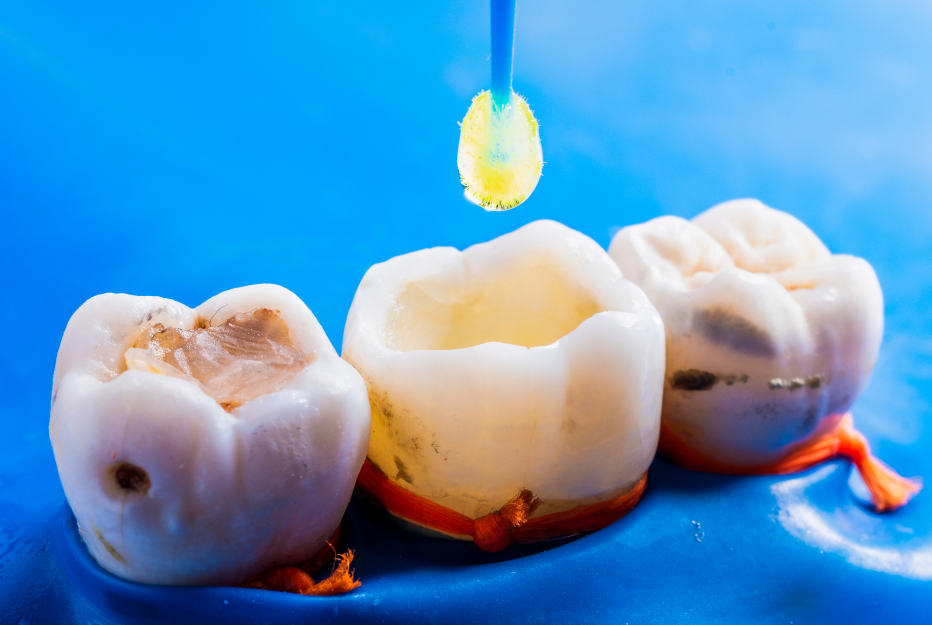
Fillings are designed to “fill” a small hole caused by decay. They rely on the surrounding walls of your natural tooth to stay in place and handle the pressure of chewing. If those walls are thin, cracked, or mostly decayed, the filling becomes a liability.
If you try to force a large filling into a weak tooth, the tooth may eventually split under pressure. This can lead to an emergency extraction, which is far more stressful and expensive than getting a crown in the first place. This is why understanding the scope of restorative dental treatment is vital for long-term health.
5 Signs You Need More Than Just a Filling
How do you know when it is time to consider more advanced options? Here are five clear indicators that your tooth requires structural reinforcement.
1. Extensive Decay (Over 50% of the Tooth)
If decay has consumed more than half of your tooth’s natural structure, there isn’t enough “anchor” left for a filling. A filling in this scenario acts like a wedge; every time you bite down, it pushes against the remaining thin walls of the tooth.
In these cases, we typically recommend a dental crown. A crown acts like a protective cap, encasing the entire visible portion of the tooth. This redistributes the pressure of chewing and prevents the tooth from shattering.
2. Visible Cracks or Fractures
Cracks are different from cavities. While a cavity is a hole, a crack is a structural failure. If you have a fractured tooth, a filling will not hold the pieces together. In fact, the expansion and contraction of filling material can actually make the crack worse over time.
To save a cracked tooth, you need a treatment that “binds” the tooth. Onlays or crowns are the gold standard here. They provide a stable surface that prevents the fracture from reaching the root.
3. Severe Pain or Temperature Sensitivity
Do you feel a sharp, lingering pain when you drink cold water or chew? This is often a sign that the damage has moved past the enamel and into the “pulp” (the nerve center) of the tooth.
Once the nerve is affected, a surface-level filling won’t solve the problem. You may need root canal therapy to remove the infection, followed by a crown to restore the tooth’s strength. Ignoring this pain usually leads to an abscess, which is a much more serious medical issue.
4. Failing or Large Old Fillings
Dental materials have improved significantly, but they don’t last forever. If you have a large silver (amalgam) filling from ten years ago, it may be reaching the end of its lifespan. Old fillings can leak, allowing new decay to form underneath where you can’t see it.
When we replace a very large old filling, we often find that there isn’t enough healthy tooth left to support a new one. Upgrading to a porcelain inlay or a crown ensures better long-term stability and a much more natural appearance.
5. Missing Teeth or Significant Gaps
A filling can only treat a tooth that is still there. If you have lost a tooth entirely, the surrounding teeth will eventually begin to shift into the empty space. This ruins your bite alignment and can lead to jaw pain (TMJ).
In this situation, restorative dental treatment options like dental bridges or implants are necessary. These treatments don’t just fill a gap; they preserve your jawbone health and keep your remaining teeth in their proper positions.
The True Value of Restorative Care
Many patients hesitate when they hear the cost of a crown or an implant. However, when you look at the long-term benefits, the “worth” becomes very clear.
Long-Term Durability
While a composite filling might last 5 to 7 years, a high-quality crown or bridge can easily last 15 years or even a lifetime with proper oral hygiene. When you calculate the cost per year of a healthy smile, advanced restorations are often the more economical choice.
Preserving Your Natural Look
Modern restorative materials, such as E-max or Zirconia, mimic the light-reflecting properties of natural enamel. Unlike dark metal fillings, these restorations are virtually invisible. They allow you to speak and smile with total confidence.
Preventing Bone Loss
When you lose a tooth and don’t replace it, the jawbone in that area begins to shrink (resorption). This can eventually change the shape of your face, leading to a “sunken” appearance. Dental implants are the only restorative option that actually stimulates the bone, keeping your facial structure youthful and strong.
Is it a Good Investment?
We often view dental work as an expense, but it is more accurate to view it as an investment in your overall health. Research from organizations like the American Dental Association consistently shows that oral infections and missing teeth are linked to systemic issues like heart disease and diabetes.
By choosing restorative dental treatment early, you avoid the “domino effect” of dental failure. Saving one tooth today prevents the loss of three teeth tomorrow.
Conclusion
If you are experiencing persistent pain, notice a crack, or have been told your filling is failing, don’t wait for a total breakdown. A simple filling is a great tool, but it isn’t a cure-all for significant structural damage. Restorative treatments offer the durability, protection, and beauty that your smile deserves.
We believe everyone deserves a functional, pain-free smile. Investing in the right treatment now saves you time, money, and discomfort in the future.