
A brighter smile is one of the quickest ways to boost your confidence, but choosing the right whitening solution isn’t always simple. Walk down any drugstore aisle, and you’ll find shelves packed with strips, pens, trays, and toothpaste promising dramatic results. Meanwhile, dental offices offer professional teeth whitening treatments with a bigger price tag, promising a faster and whiter smile.
So which option is actually worth the money?
The answer depends on your budget, your goals, and the type of staining you’re dealing with. Store-bought kits can do a reasonable job of lifting mild surface stains, but professional teeth whitening performed by a whitening dentist consistently delivers faster, safer, and more dramatic results for most patients.
Here’s an updated, evidence-based comparison to help you decide.
How Teeth Whitening Actually Works
Both professional treatments and store-bought products rely on bleaching agents to lift stains from enamel and the layers beneath it. The two most common active ingredients are:
- Hydrogen peroxide
- Carbamide peroxide
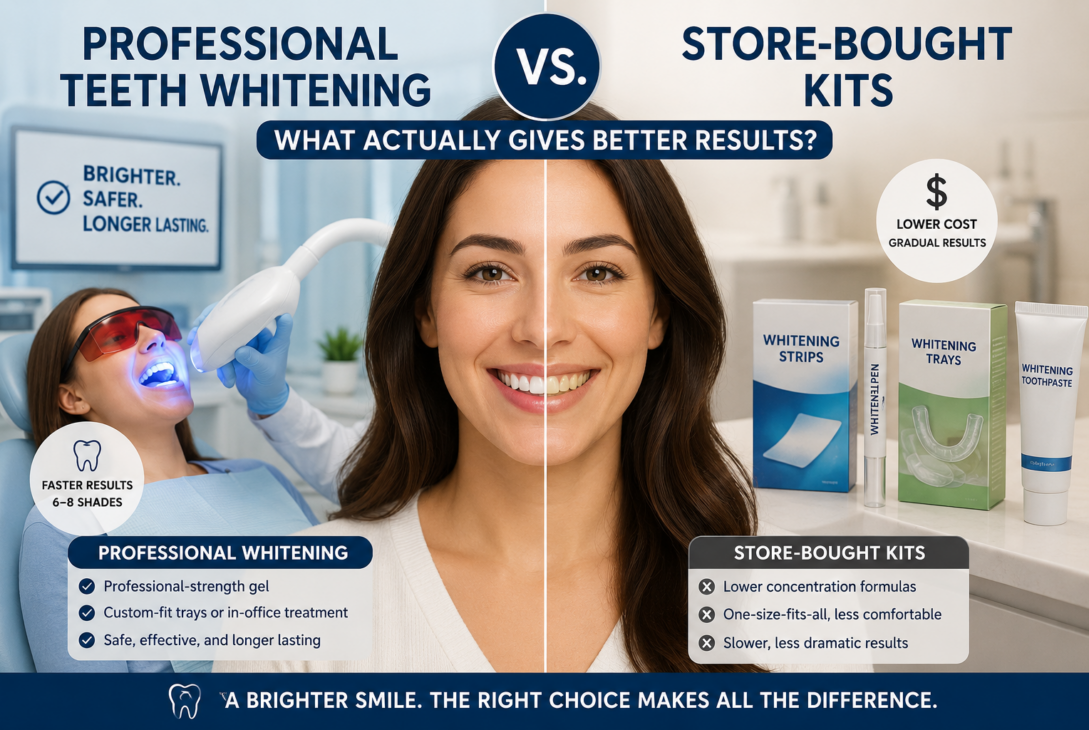
The real difference comes down to concentration and delivery. Over-the-counter products typically contain roughly 3% to 10% hydrogen peroxide (or 10% to 35% carbamide peroxide), while professional whitening treatments can use concentrations of up to 43%. That gap in strength is a major reason in-office whitening and dentist-supervised care remove teeth stains faster and more thoroughly than anything sold on a store shelf.
Professional Whitening Delivers Faster, More Noticeable Results
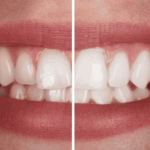
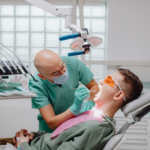
Speed is one of the biggest advantages of professional teeth whitening. A single in-office session, typically 60 to 90 minutes, can lighten teeth by roughly six to eight shades, often using light-activated gel for faster results. Dentist-dispensed custom take-home trays offer a strong middle ground, delivering professional-grade whitening in about one to two weeks thanks to trays molded specifically to your bite.
This makes in-office whitening especially effective for:
- Coffee and tea stains
- Tobacco discoloration
- Age-related yellowing
- Moderate to severe staining
If you have a wedding, graduation, job interview, or photoshoot coming up, professional teeth whitening remains the fastest route to a brighter smile.
Store-Bought Kits Work Best on Light, Surface-Level Stains
Store-bought whitening products remain popular because they’re inexpensive and require no prescription. Common options include:
- Whitening strips
- Whitening pens
- Whitening trays
- Whitening toothpaste
These products are best suited to mild surface staining from everyday foods and drinks. Results are gradual: most people need two to eight weeks of consistent daily use to notice a difference, and the total whitening effect is usually limited to one to five shades. For deeper or more stubborn stained teeth caused by aging, medication, or trauma, over-the-counter kits generally can’t match what professional whitening treatment can achieve.
Safety Is a Bigger Factor Than Most People Realize
Because store-bought trays and strips aren’t custom-fitted, whitening gel can seep onto the gums, leading to irritation and uneven results. Overuse or leaving products on longer than directed can cause:
- Uneven whitening
- Gum irritation
- Tooth sensitivity
- Patchy results
Professional teeth whitening minimizes these risks through careful supervision. A dentist typically uses:
- Protective gum barriers
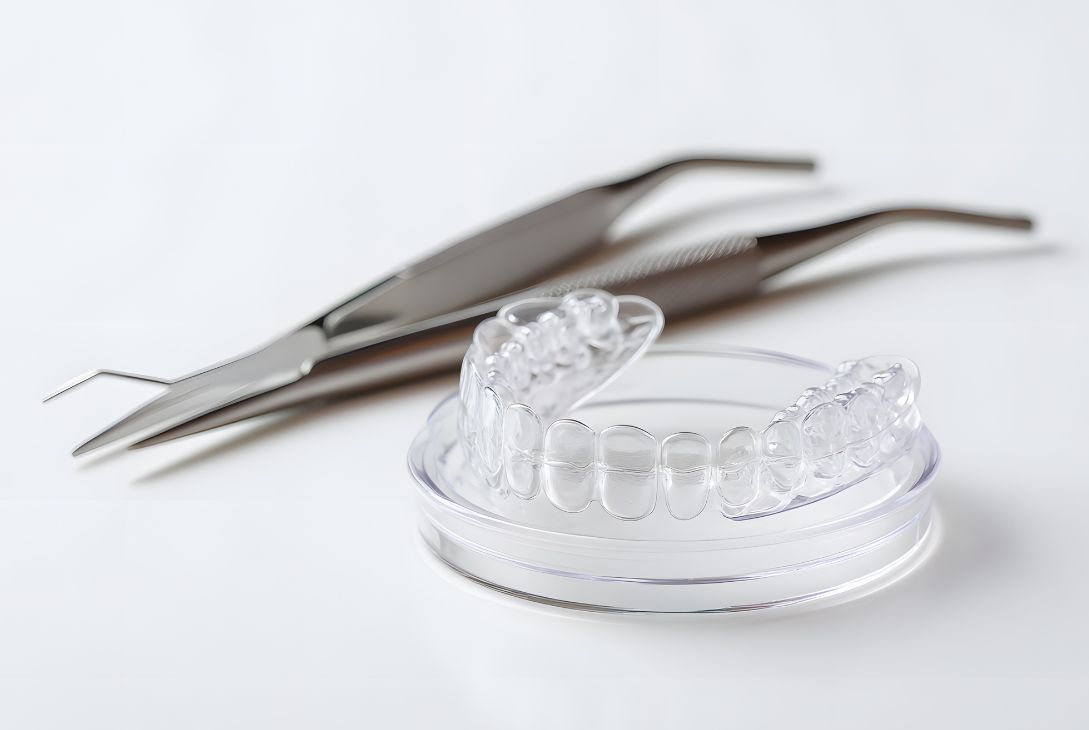
- Custom-fitted whitening trays
- Professional-strength gels, sometimes with desensitizing ingredients built in
Before any teeth bleaching begins, your dentist will also check for cavities, cracked teeth, or gum disease that could affect treatment an assessment that helps ensure the process is both effective and safe.
Comparing Costs and Long-Term Value
At first glance, store-bought kits look far cheaper. Typical current pricing looks like this:
- Store-bought kits: $20–$100
- Dentist-dispensed custom take-home trays: $250–$500
- In-office professional whitening treatment: $400–$800 per session
Store-bought kits have a lower upfront cost, but many people end up repurchasing them repeatedly to maintain results. Professional whitening tends to last longer, typically six months to two years with good oral hygiene and occasional touch-ups, which often makes it the better long-term value despite the higher initial investment.
Not Every Stain Responds the Same Way
A common misconception is that whitening works equally well on every type of discoloration. In reality, results depend heavily on what’s causing the stain.
Surface stains from coffee, tea, red wine, and smoking typically respond very well to both store-bought and professional whitening treatment. Intrinsic stains caused by certain medications, dental trauma, fluorosis, or natural aging are much harder to treat and usually require a professional evaluation to determine the best approach.
Existing Dental Work Won’t Whiten
It’s also worth remembering that whitening doesn’t change the color of:
- Crowns
- Veneers
- Dental bonding
- Tooth-colored fillings
If your natural teeth whiten but existing restorations don’t, older dental work can end up looking noticeably darker by comparison. A dentist can factor this into your treatment plan and recommend replacing restorations if needed to keep your smile looking consistent.
Which Option Is Right for You?
Store-bought whitening products may be a good fit if you:
- Have only mild staining
- Want gradual, low-cost improvement
- Are simply maintaining previous whitening results
- Are working with a limited budget
Professional teeth whitening is likely the better choice if you:
- Want fast, noticeable results
- Have moderate to severe staining
- Experience sensitivity with drugstore products
- Want a deeper whitening treatment with lower risk of complications
- Have restorative dental work planned
Choosing the right option from the start saves both time and money and helps you get a brighter smile you’re actually happy with.
Frequently Asked Questions
How long do professional whitening results last?
Most patients enjoy results for six months to two years, depending on diet, oral hygiene, and lifestyle habits. Limiting staining foods and drinks and scheduling occasional touch-ups helps results last longer.
Are store-bought whitening kits safe?
Most are safe when used exactly as directed. Overuse, ill-fitting trays, or leaving products on too long can increase the risk of tooth sensitivity and gum irritation.
Does whitening damage tooth enamel?
When performed or supervised by a dentist, whitening treatment is not harmful to healthy enamel. Professional oversight, including protective barriers and controlled application, further reduces any risk.
Does whitening remove every kind of stain?
No. Whitening works best on surface stains. Intrinsic discoloration from medication, trauma, or fluorosis often requires other cosmetic options, such as bonding or veneers.
Do I need to see a dentist before whitening my teeth?
Yes. A dental exam can catch cavities, gum disease, cracked teeth, or existing restorations that could affect your results. Your dentist can then recommend the whitening treatment best suited to your smile.
Choose the Whitening Option That Fits Your Smile Goals
A brighter smile is an investment in more than just your appearance; it’s an investment in confidence. Store-bought products can be a reasonable option for light staining and touch-ups, but professional teeth whitening consistently delivers faster, safer, and longer-lasting results under a dentist’s care.
Before deciding, think about the type of stains you have, how quickly you want results, and your overall dental health. A professional evaluation is the best way to choose the safest, most effective path to a whiter, brighter smile that lasts.