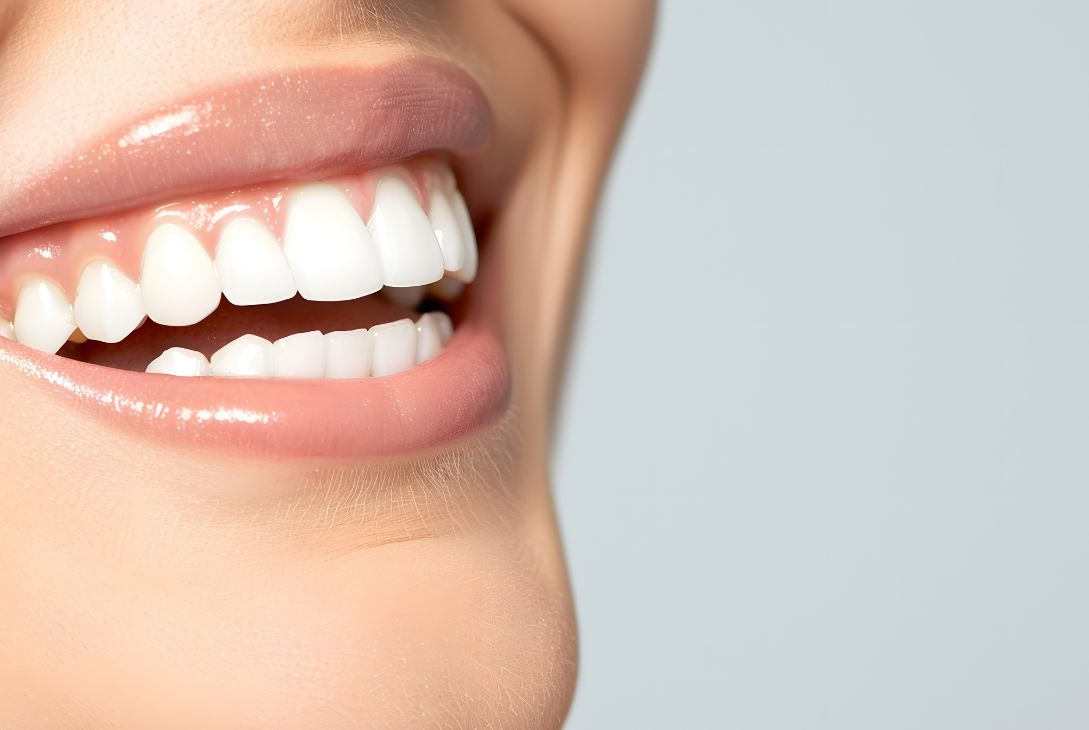

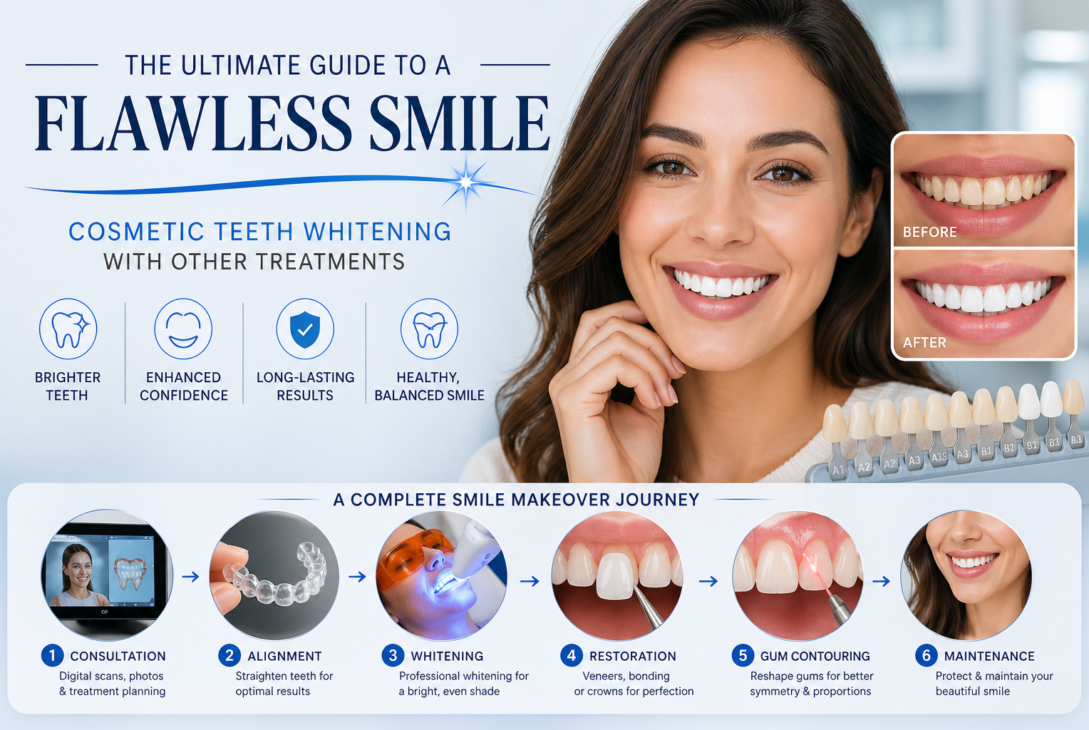
A shiny, bold smile may not only change your look but also your attitude in your day-to-day interactions. Having a perfect smile doesn’t require a single treatment anymore in 2026; it is a cohesive combination of procedures that work together to produce a balanced, naturally looking outcome. Most smile makeovers start with cosmetic teeth whitening, as it provides the basis for matching the color of your natural teeth before restorations and corrections.
When used in professional settings and combined with other interventions such as veneers, bonding, orthodontics, or gum contouring, whitening can help achieve a seamless, smooth final result.
Why Whitening Is the First Step in Most Smile Makeovers
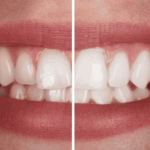
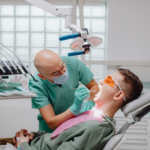
Professional whitening treatments involve peroxide gels activated by LED or laser light to break down stains that cannot be removed with other methods. These spots may be caused by coffee, tea, tobacco, aging, or certain medications. Clinical whitening differs from over-the-counter products in that it penetrates more deeply into the tooth surface and yields visible results in a single session.
Beginning with whitening, dentists can create the most natural, brightest color for your teeth. This is significant since the restorative material, such as porcelain or composite resin, can be color-coded to match your current teeth. If you bleach with restorations, they will stay their original color, which is uneven.
The first thing that Whitening does is ensure that subsequent treatment plans are built around that preferred tooth color.
Combining Whitening and Veneers to Create Dramatic Changes
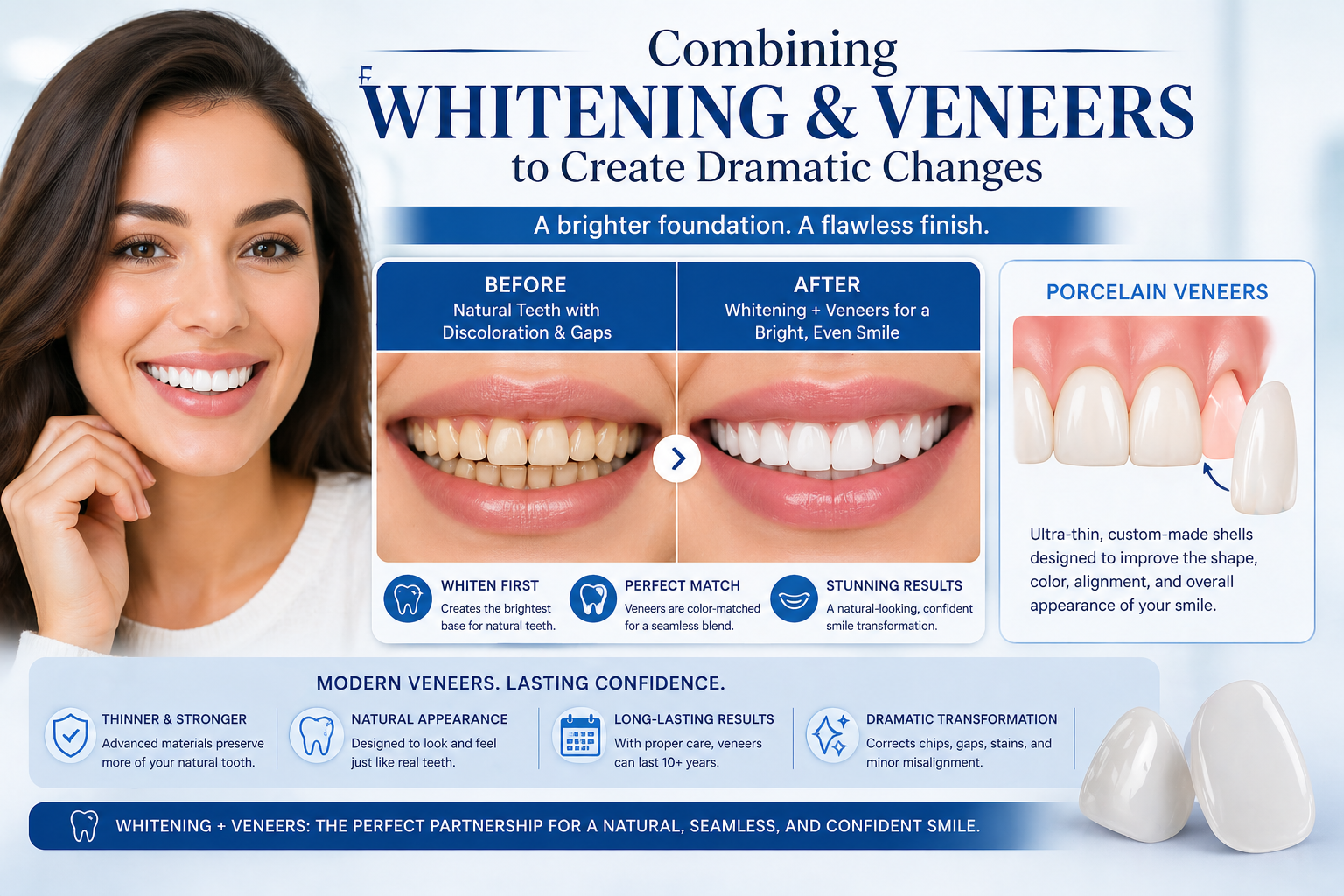
Porcelain veneers can be described as shells of thin material that are mounted on the anterior part of the teeth to fix the problem of chips, gaps, discoloration, or slight misalignment. They are frequently used by those who want a full smile change rather than a brighter look.
Pre-whitening before placing the veneers will make the neighboring natural teeth as white as possible before the veneers are color-matched. This eliminates comparison between treated and untreated teeth and gives a more natural, seamless look.
Today’s veneers are thinner and tougher than older ones, retain more of the natural tooth structure, and offer long-lasting cosmetic benefits. When well cared for, they can last much more than ten years.
The Complementary Effect of Dental Bonding on Whitening
Dental bonding is also a minimally invasive procedure that uses a tooth-colored composite resin to repair minor damage, such as chips, small gaps, or rough edges. Since the bonding material is tinted and therefore not a standard product, pre-whitening before application helps the dentist select a shade that blends perfectly with the rest of the teeth.
This combination is particularly effective when a patient is happy with the general shape of their teeth but wishes to address minor cosmetic imperfections without altering their appearance. Bonding generally takes only one visit and may provide a noticeable improvement without the need for more drastic therapies.
The Importance of Teeth Before Brightening
Another common suggestion before whitening is orthodontic treatment, such as clear aligners and other contemporary systems, if the teeth are crowded or misaligned. This is because straightening the teeth first allows the whitening agents to reach all visible surfaces more evenly, creating a more uniform shade.
The straightness of teeth also reflects more light, which improves the appearance of whitened teeth. After orthodontic treatment, a whitening session can unlock the full aesthetic potential of the new straight smile.
Such an order can be followed for alignment and whitening; this method is necessary to prevent uneven color spots and to make the final effect look even and smooth.
The Applications of Crowns and Gum Contouring to the Smile
Some situations might have teeth that are too damaged to be veneered or bonded, and crowns are the appropriate option. These full-coverage restorations protect weakened teeth and preserve their form and appearance. Prem-whitening your teeth enables the creation of crowns in a color that fits your new, bright smile.
Another cosmetic procedure that can improve the overall aesthetics of the smile is gum contouring. Dentists can reshape uneven or excessive gum tissue to reveal more of the natural tooth surface and improve symmetry. Whitening teeth after contouring the gums will show the actual proportions of your teeth, so that the whitening exercise will not only improve part of the smile but the whole.
Advances in Whitening Technology Making Combinations Safer
Contemporary whitening systems have also evolved, incorporating desensitizing agents and improved gel formulations to minimize discomfort. Severe treatments also involve using minerals to strengthen the enamel and reduce sensitivity after the procedure.
Whitening agents can also be used with laser and LED activation technology to improve efficiency, reducing treatment time while remaining safe. There are even digital imaging and simulation tools to see what your smile will look like after a complete makeover and make informed choices before you undertake treatment.
Such developments ensure that, more than ever before, it is possible to integrate the whitening process with other cosmetic surgeries without compromising comfort or oral health.
A Standard Stepwise Smile Makeover Management
An all-inclusive smile makeover typically starts with a consultation that includes digital scans, photographs, and a thorough discussion of your intentions. Based on this assessment, your dentist will prescribe a series of treatments to you, depending on your needs.
Alignment or gum reshaping may be required, in which case the procedures are normally done at the first instance. The last tooth color is then achieved through whitening. Once the color has set, the restoration (veneers, bonding, or crowns) is applied to match the brightened teeth.
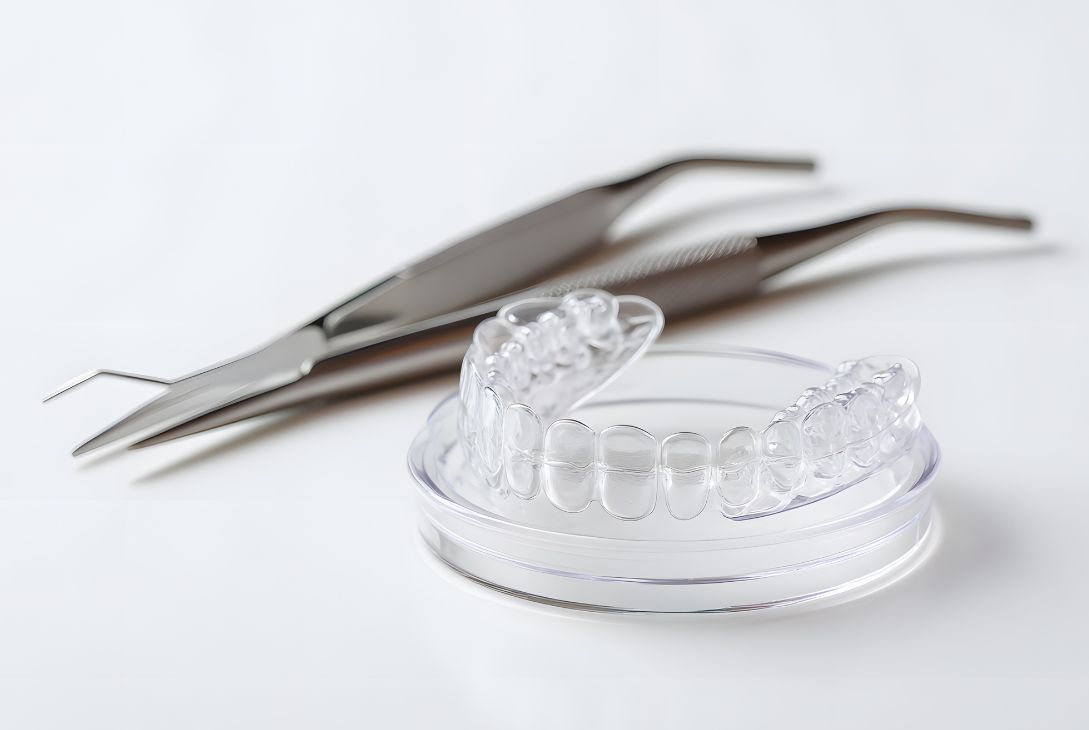
Lastly, custom trays, nightguards, and frequent visits to the dentist are among the maintenance strategies that will be implemented to help maintain the results over the years.
Frequently Asked Questions
What is the duration of the professional whitening?
The lifespan of the whitening process is determined by lifestyle behaviors such as diet, smoking, and oral hygiene. Results may last several years on average, provided they are well-maintained and periodically treated with touch-up treatments.
Is it possible to whiten in the presence of dental restorations?
Crowns, veneers, and bonding do not change color with whitening agents. That is why dentists frequently recommend whitening before the placement or replacement of restorations to make all components of the smile look the same.
Can a combination of several cosmetic dental procedures be safe?
Yes, as it is done under professional guidance and is organized, combining treatments is, as a rule, safe and frequently advisable to obtain the most harmonious results.
Will it make my teeth sensitive to whitening?
In rare cases, patients develop short-term sensitivity following whitening, but new compositions contain desensitizing agents that greatly reduce this risk. Sensitivity is self-limiting and typically resolves within several days.
Sustaining my smile makeover results?
It is important to maintain oral health, limit intake of staining foods and drinks, wear personal whitening trays, or get an oral cleaning once a month to ensure that your smile remains healthy over time.
How to Design a Natural, Balanced, and Confident Smile
An already perfect smile is hardly a one-time treatment. Whitening and other cosmetic procedures can be combined strategically so that not only a more aesthetic but also a more desirable result is achieved. With proper planning, technological advancements, and expert advice, one can be assured that each step makes the next one better, leading to a smile that not only looks beautiful but also supports long-term oral hygiene.