
A toothache at 2 a.m. is every parent’s nightmare, and it’s often the moment they realize they should have booked that first appointment months earlier. Knowing when a child needs a pediatric dentist isn’t always obvious, especially since early tooth decay can hide in plain sight.
This guide breaks down the warning signs every parent should know, from the first check-up to the red flags that call for an urgent visit, so small problems never turn into painful ones.
When Should a Child First See a Pediatric Dentist?
The American Academy of Pediatric Dentistry (AAPD) recommends scheduling a child’s first dental visit within six months of the first tooth erupting, or by their first birthday, whichever comes first.
This early appointment establishes what dentists call a “dental home.” It gives a children’s dentist the chance to track jaw and bite development, catch problems before they spread, and teach parents how to prevent early childhood cavities.
After that first visit, a regular kids’ dental checkup every six months keeps small issues from becoming big ones and helps children grow comfortable with the dentist’s chair long before they need serious work done.
Common Signs of Cavities in Children
According to the CDC, cavities are the most common chronic disease of childhood, and half of children aged 6 to 9 have already had one. Cavities in children often develop quietly, so parents need to know exactly what to look for.
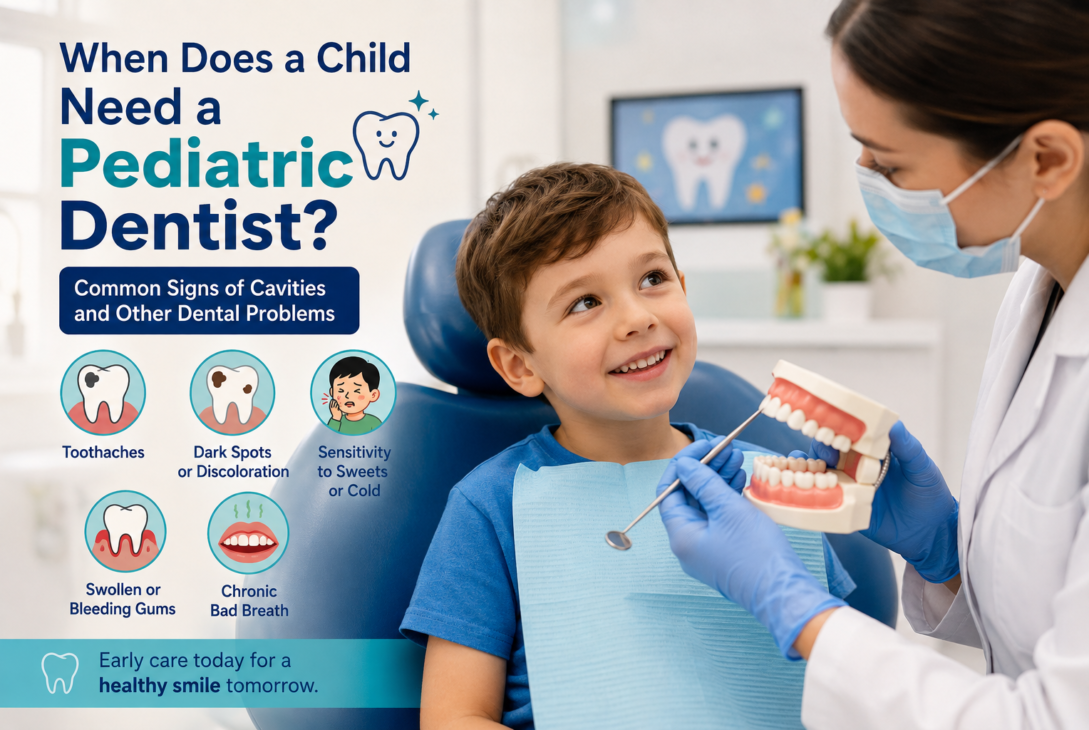
White or Chalky Spots
A dull, white band near the gum line is usually the first visible sign of child tooth decay. It marks where enamel is starting to break down, and it’s the easiest stage to reverse with fluoride and better brushing.
Dark Spots or Discoloration
Yellow, brown, or black spots on a tooth mean the decay has moved past the earliest stage. These marks won’t brush away and typically need a dentist’s evaluation.
Sensitivity to Temperature and Sweets
A child who winces at ice cream, hot soup, or candy may have enamel that’s already compromised. Sensitivity is the tooth’s way of signaling that the nerve is closer to the surface than it should be.
Visible Holes or Pits
Chips, cracks, or small craters on a tooth’s surface point to advanced decay. At this stage, a filling or other restorative treatment is almost always necessary.
Persistent Toothaches
Spontaneous pain, or an ache that wakes a child up at night, suggests decay has reached deep into the tooth and may be approaching the nerve. This is not a symptom to wait out.
Chronic Bad Breath
Bad breath that doesn’t go away with brushing often means bacteria are thriving inside a cavity that’s out of reach of a toothbrush. It’s a subtle but reliable warning sign of baby teeth cavities.
Other Dental Problems That Need Attention
Cavities aren’t the only reason to call a kids’ dentist. These signs also call for a prompt appointment:
Swollen or Bleeding Gums
Red, puffy gums that bleed during brushing usually point to gingivitis or plaque buildup along the gum line, and they respond well to an early cleaning.
Difficulty Chewing
A child who avoids crunchy foods, chews only on one side, or holds their jaw is likely dealing with structural pain that needs a professional look.
Gum Pimples or Abscesses
A small, fluid-filled bump on the gums can signal an infection at the root of a tooth. This is one sign that shouldn’t wait for the next scheduled cleaning.
Premature Loose Teeth
A wobbly tooth outside the normal age range, or one that’s loose after an impact, needs a dentist’s evaluation to rule out injury to the tooth or the bone underneath it.
At-Home Prevention Tips for Baby Teeth Cavities
Primary teeth hold the space for adult teeth, so protecting them matters more than many parents realize. A few habits go a long way between visits:
- Watch toothpaste amounts: a smear the size of a grain of rice for children under 3, moving to a pea-sized amount from age 3 on.
- Skip the bedtime bottle: milk, formula, and juice left sitting on teeth overnight feed the bacteria that cause rapid decay.
- Start flossing early: once two teeth touch, daily flossing clears out the plaque a toothbrush can’t reach.
- Keep up routine cleanings: a professional children’s dental cleaning every six months removes buildup before it turns into decay.
Why Regular Pediatric Dental Care Makes the Difference
Good pediatric dental care isn’t just about fixing problems; it’s about catching them before a child ever feels pain. A dentist trained to work with kids can spot the earliest chalky spots, monitor how baby teeth are guiding adult teeth into place, and adjust prevention advice as a child grows.
Waiting for obvious symptoms, like a visible hole or a sleepless night, means the decay has already had time to spread. Routine visits catch child tooth decay at the stage where it’s easiest, cheapest, and least painful to treat.
Give Your Child’s Smile the Head Start It Deserves
Cavities and other dental problems rarely announce themselves early, which is exactly why regular visits to a children’s dentist matter so much. Between the first birthday check-up and every six-month cleaning after it, consistent care is what keeps a child’s smile healthy for the long run.
If it’s been more than six months since your child’s last visit, or you’ve noticed any of the signs above, schedule a pediatric dental checkup today. Catching a problem early is always easier on your child and on your wallet than treating one that’s been left to grow.