
You, as a parent, have even grown accustomed to bumps, bruises, and scraped knees now and then. But dental issues? Those can sneak up quietly. Other times, it is easy, such as when a tooth is knocked out during a soccer game. In the other instances, the indicators are minimal and can be disregarded until the issue grows bigger than anticipated.
There is more child-centred, advanced dental care provided to children in 2026. Although general dentists provide routine cleaning, fillings, and preventive treatment, there are instances when it is necessary to call a pediatric oral surgeon. Such specialists require additional years of training devoted to the specifics of children’s anatomy, jaw formation, and the safety of sedation, as well as the accuracy of surgery adapted to growing bodies.
1. Severe Tooth Trauma
Kids are active. Trips, sporting accidents and playground accidents occur. A broken tooth may not look that serious; however, if a tooth is knocked out, severely fractured, or pushed, it becomes an emergency.
In cases of trauma to the root or jawbone, this goes beyond what can be addressed in the office during routine dental care. A surgeon can align teeth, reinforce the bone, and check for unseen damage that may not be apparent. Sometimes, fast action can be the only thing that helps retain a permanent tooth; sometimes it doesn’t.
In the case of a knocked-out tooth in your child, emergency treatment is vital. Once stabilisation is complete, follow-up with a specialist is observed to ensure the healing process is correct and no long-term alignment problems occur. Never mind that trauma may cause infection or movement of teeth or manifestation of developmental problems as the jaw progresses.
2. Rampant or Untreatable Tooth Decay
Children also develop tooth decay very quickly, particularly younger children who have difficulty brushing effectively. Advanced care can be required when the number of cavities is extensive, and the child is too anxious or uncooperative to undergo many sessions.
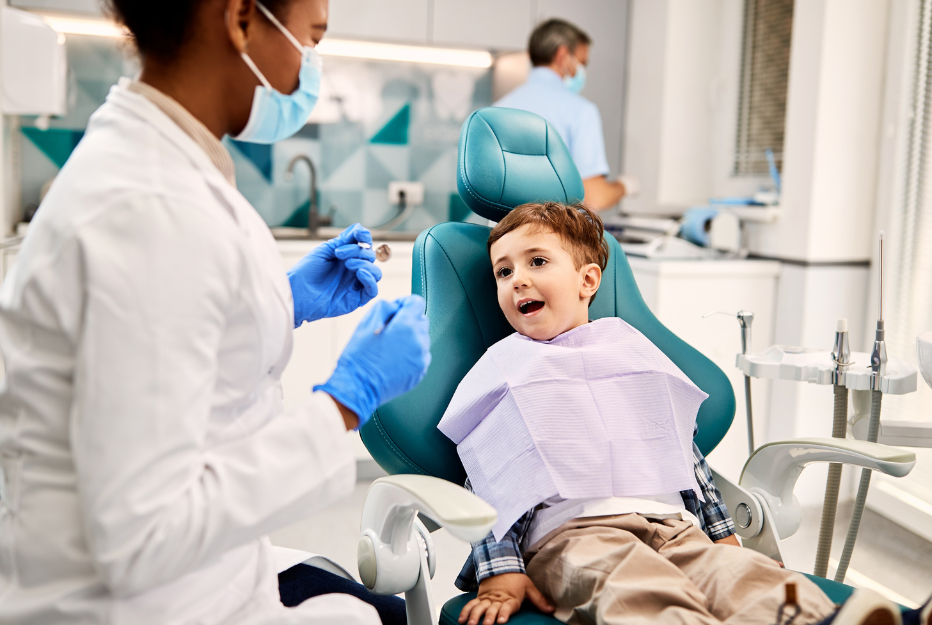
There are occasions where general anaesthetic treatment is the most effective and safe. This permits several additional removals or reconstructions to be carried out at one regulated location. Experts receive education to administer anaesthesia and perform operations safely in children and with the least trauma.
It is worthwhile to mention that not every cavity has to be handled surgically. A general dentist should be able to treat many of them. But in cases of widespread decay, involving more than one tooth, or when behavioural issues pose a challenge and regular treatment is not safe, the patient should be referred to a surgical specialist so that their child does not undergo needless stress.
3. Affected or Ruptured Erupting Teeth
Children’s teeth do not always come in as expected. Permanent teeth can be caught under the gums, mostly on canines and wisdom teeth. Failure to form or develop teeth at their proper angles may lead to tooth crowding, which can cause disorientation.
Affected teeth may have to be exposed or removed surgically in minor procedures. Early evaluation is key. These problems, before the onset of symptoms, are usually revealed by X-rays, which is why it is important to visit the dentist regularly.
Some children may be born with extra teeth, missing teeth, or developmental anomalies. Such conditions can impair speech, chewing, or orthodontic planning. A dentist can extract obstructive teeth or help expose impacted ones to allow orthodontic treatment to be applied appropriately.
Through health care in developmental years, these problems are corrected, and more invasive procedures are avoided in late adulthood. With early intervention, it is frequent to have an easier way out.
4. Jaw or Soft Tissue Abnormalities
The development of the face and jaws is complicated. The swelling of the mouth, constant cysts, or lumps of a different shape should not be neglected. They might need a surgical examination to rule out infection or structural issues.
Developmental problems with growth, such as severe overbites, underbites, or asymmetrical jaw development, may affect chewing, speaking, and even breathing. Although orthodontists address matters related to alignment, surgical specialists usually intervene when underlying skeletal discrepancies require correction.
Children who have cleft-related disorders or craniofacial defects often need the combined efforts of several specialists. Early surgery improves both functional outcomes and appearance.
If your child has been experiencing chronic jaw pain, cannot fully open their mouth, or has any visible facial asymmetry, they should be evaluated by a professional.
5. Complex Medical or Dental Overlaps
There are children with medical conditions that make dental treatment difficult. Bleeding problems, heart issues, developmental issues, or immunological issues need to be carefully coordinated in case of surgery.
Experts are equipped with skills in sedation procedures, hemostasis control, and medical planning in surgical patients with high medical complexities. They cooperate with paediatricians and other medical professionals to ensure that procedures are safe.
Besides that, some cases of extreme gum disease, non-responsive erosion or advanced infections cannot be resolved without surgical skills. A complete medical history, medications and recent imaging are also provided to facilitate easier referrals and improved results.
As your child’s health picture becomes a little more complicated than regular dental treatment, specialised care is not only useful but also needed.

The Workings of the Referral Process
The general dentist of your child usually finds the necessity of further examination. They will offer imaging, oral records and a comprehensive referral explaining the concern. Parents should also share relevant medical history and recent symptoms.
Emergencies are prevented through early referral. Acting before the pain occurs gives insight and confidence rather than addressing them once the pain has intensified.
Frequently Asked Questions
Would I know whether my child has an injury that needs surgery?
If the tooth is knocked out, grossly displaced, or there is swelling or bleeding in the jaw that cannot be controlled, emergency treatment must be provided and followed up with a specialist examination.
Is it safe to use general anaesthesia in children during dental operations?
It is safe when used under the care of trained professionals in appropriate settings and is usually required for intensive procedures among young or anxious patients.
What is the age at which affected teeth are to be checked?
Assessment usually starts in late childhood, when the permanent teeth are setting in, and is detected by regular X-rays.
Are issues of jaw growth self-limiting?
Minor problems can be corrected, but gross skeletal mismatches often need expert attention and even surgery.
Do we need a specialist for each cavity?
No. General dentists treat most cavities. Only in cases of significant decay or when more sophisticated care is needed is referral carried out.
Being Proactive on the Oral Health of Your Child
Parents do not have to panic in all cases of dental problems, but they must be alert. Some soft indicators may be harbingers of underlying problems that cannot be addressed by regular care. Early intervention will save pain, complicate the treatment process, and safeguard the future growth.
When you believe that something is too big to be handled in ordinary dentistry, follow your gut and have a professional tell you what that something is. There is specialised care, and children receive the best possible treatment that is safe and effective. Children grow with healthy, confident smiles.