
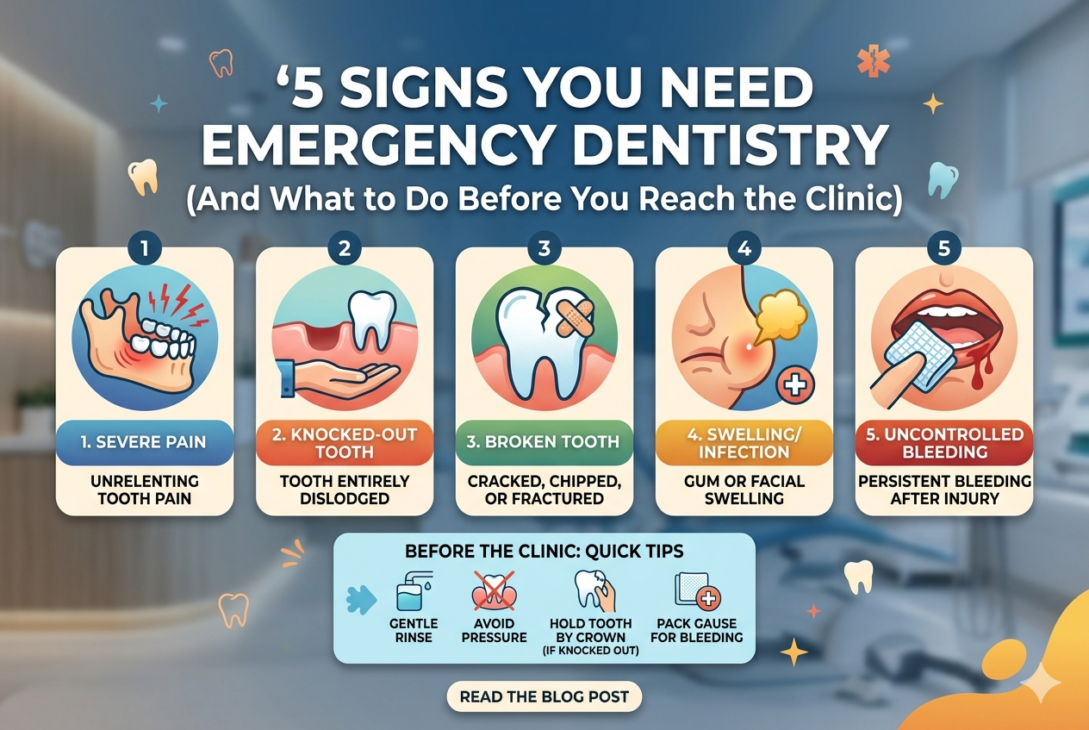
Dental problems can spiral out of control real quick. You go from mild discomfort to stabbing pain, swelling, or tons of blood that will not seem to stop. The difficulty is deciding how serious it is enough to act on at that moment. This is where our knowledge of the indicators of emergency dentistry comes into play.
In fact, moving fast can make the difference between saving and losing a tooth. It also helps control the spread of infection and long-term complications. Here are the top five signs that you need emergency dental care, along with what you need to know to prepare for a trip to the clinic.
Severe, Unrelenting Tooth Pain
It is also pain that you cannot disregard, particularly if it has become excruciating and unrelenting. A minor pain may be intermittent, but constant aching pain is usually due to inflammation, extensive decay, or nerve destruction.
You may experience this pain radiating up to your jaw, ear, or head. No more worrying about how miserable it can feel when you chew or put pressure on it, as it gets worse, with your daily activities just becoming uncomfortable. In fact, if just taking over-the-counter pain relief doesn’t help at all, other than relieve the discomfort for a short while, that’s not a good sign; that’s your cue that something deeper is wrong.
What you can do immediately:
- If possible, start with a suggested pain reliever (as long as it is safe for you).
- Refrain from chewing on that side of your mouth, and gently rinse your mouth with warm water to help keep the area clean.
- Most importantly, do not hesitate; go to the emergency right now.
A Knocked-Out Tooth
Almost any dental trauma can feel scary, but having a tooth entirely knocked out is one of the few situations that hits the panic button. It creates time sensitivity, whether it happens in sports, in a fall, or in an accident.
However, there is a short window–typically less than an hour–in which the tooth may survive if handled appropriately. After going outside of those times, the odds of reattachment are substantially lower.
What you can do immediately:
- DO grab the tooth by the crown, not the root.
- If it is dirty, rinse it gently in water with no scrubbing (data until October 2023).
- Put it back into the socket if you can, and then hold it firmly.
- Otherwise, save it next to your milk or between your cheeks.
- Immediately afterwards, you need to see a dentist.
Being fast here can potentially save your tooth.
Pain associated with a Broken, Cracked, or Chipped Tooth
Not all dental issues are skin-deep. If you experience pain along with a crack or break, it usually indicates that the inner layers of the tooth are exposed. Ignoring this could be the main reason for sensitivity, infection, and advanced impairment.
Even sharp edges can irritate your tongue or cheeks, which in turn leads to discomfort. A tiny fracture can develop into a much larger problem over time.
What you can do immediately:
- Use warm salt water to gargle to lessen irritation and clear the region.
- Steer clear of foods that are hard, sticky or extremely hot and cold.
- Gently press gauze against the bleeding area if you notice any bleeding.
- Try to make the region steady until you can see a healthcare expert.
Signs of Swelling, Abscess, or Infection
The most dangerous symptoms are swelling of your gums or face. It usually points to an infection that can spread if left081 relatively untreated. You may see a bump on your gum resembling a pimple, tenderness, or a foul taste in the mouth.
Severe symptoms can include swelling of the face, neck or jaw, fever or difficulty swallowing. Never too late to heed these symptoms.
What you can do immediately:
- Gargle warm salt water several times a day to decrease the number of germs.
- Do not try to pop or drain any swelling on your own.
- If the swelling compromises your ability to breathe or swallow, go to the emergency room ahead of a dentist.
Acting early is vital to safeguarding your oral and overall wellness.
Uncontrolled Bleeding or Oral Injury
A little blood after even a minor incident is to be expected, but if it won’t stop after a few minutes of pressing, we have an emergency. This occurs due to some trauma, accidents, or injuries to the lip, gums, or tongue.
On some occasions, bleeding may include a possible jaw injury. If your bite feels different or you have trouble closing your mouth, it may signal a more serious problem.
What you can do immediately:
- Press firmly and consistently using clean gauze or a cloth for a minimum of ten to fifteen minutes.
- Go to the nearest emergency facility if the bleeding persists or deteriorates.
- If it is a broken tooth, keep any broken pieces in a moist environment and bring them in with you if you can.
What to do Before You Get to the Clinic
Preparation, when you’re in pain or a panic, is probably not the first thing you think of, but it can really ease the trip.
- Bring your ID, insurance card, and any medications you are currently taking.
- If applicable, record when the issue began, what caused the problem, and the steps you have already taken. This data allows a speedy, direct response from the dental team.
- Wash your mouth, but do not wash it all over. A gentle brushing and rinsing will suffice. Do not scrub excessively, which can aggravate the condition.
Why Acting Fast Makes All the Difference
Well, here is the reality — dental emergencies do not heal on their own. Putting it off for “just one more day” can turn a minor problem into something much worse.
Taking quick action will not only alleviate pain but also increase the likelihood of saving your tooth and avoiding other problems. Contemporary Emergency Care is to stabilize the issue, manage pain, and lay the groundwork for a successful recovery.
You can think of it as safeguarding your teeth and your health and well-being.
FAQs
Why do I know whether my dental problem is an emergency?
Consider it an emergency and seek immediate care if you have severe pain and swelling, if bleeding persists or if the trauma is significant.
Is a knocked-out tooth always restorable?
You’ll not always save it, but taking action in the first hour gives you a much better chance of doing so.
Should I go to an ER or a dentist?
Go to the ER first only if you have serious swelling, breathing problems, or extreme bleeding. Otherwise, seek urgent dental care.
Painkillers before treatment – is it safe?
Yes, as long as you follow dosage instructions and have no medical restrictions
How Does an Emergency Dentist Visit Work?
It’s really about pain management, stabilizing the problem and figuring out how to deal with it going forward.