

When it comes to oral health, waiting for pain is one of the biggest mistakes people make. Many serious dental issues start with subtle warning signs that are easy to overlook. A little tooth sensitivity, occasional bleeding gums, or mild discomfort may not seem urgent, but these small symptoms can quickly develop into larger, more expensive problems if left untreated.
Routine dental care aims to prevent them. Occasionally, the doctor will identify an issue before it gets severe enough to need hours of care. Learning these warning signs can maximize your time, money, and comfort while saving your long-term oral health.
Here are some symptoms that might indicate you should book an appointment. Here, General Dental Cares is instrumental in recognising and treating these problems before they can become serious complications.
Why Early Dental Care Matters
Many dental conditions develop gradually. Dental problems like tooth decay, gum disease, infections, and bite problems can go unnoticed and painless until it is too late.
You can: Immediate Steps to Get the Help You Need Now.
- Prevent costly procedures
- Protect natural teeth
- Reduce treatment time
- Avoid dental emergencies
- Support overall health and wellness
As a general rule of thumb, the earlier a problem is identified, the easier it usually is to treat.
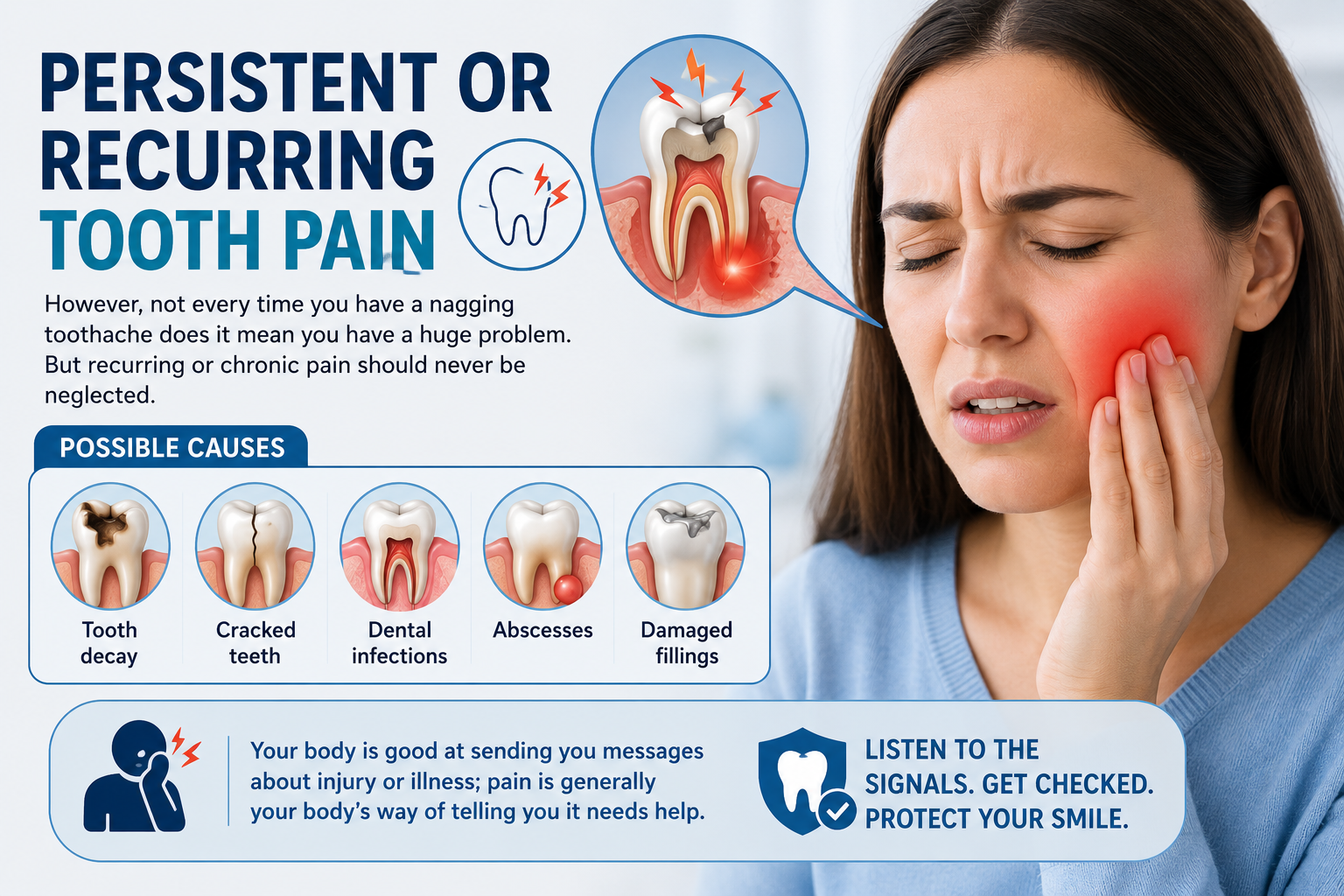
Persistent or Recurring Tooth Pain
However, not every time you have a nagging toothache does it mean you have a huge problem. But recurring or chronic pain should never be neglected.
Possible Causes
- Tooth decay
- Cracked teeth
- Dental infections
- Abscesses
- Damaged fillings
Your body is good at sending you messages about injury or illness; pain is generally your body’s way of telling you it needs help.
Why Early Treatment Matters
For most dental problems, patients need to take one course of action: receive dental care to treat their condition. If treatment is not done promptly, the decay may progress deeper into the tooth, requiring a root canal or extraction.
If a toothache returns time after time, it is time to have a professional evaluation.
Bleeding or Swollen Gums
Gums that bleed frequently when you brush or floss are a sign of gum disease.
Bleeding gums are common, and that was true in the past, but now they are one of the earliest signs of gum disease that people often ignore.
Symptoms to Watch For
- Redness
- Swelling
- Tenderness
- Bleeding during brushing
- Bleeding while flossing
The Danger of Not Treating Gum Disease
Gingivitis: Early-stage gum disease that can be resolved with professional cleanings and better dental care habits.
If left untreated, this may develop into more advanced periodontal disease, with bone loss and tooth loss.
Heightened Sensitivity to Hot, Cold, or Sweet Foods
Have you ever felt a sudden shooting pain whilst drinking something cold, like water or eating ice cream?
The most common alarm that something is wrong with your mouth is acute dental pain.
Potential Causes
- Worn enamel
- Tooth decay
- Cracked teeth
- Gum recession
- Exposed tooth roots
Why It Shouldn’t Be Ignored
Sensitivity is often a sign that the tooth’s protective layers have been breached.
Fixing it right away can stop serious damage and even save the tooth itself.
Chronic Bad Breath or Unpleasant Taste
Bad breath happens to everyone, especially after these foods. But bad breath that lingers despite cc (cane paste, mint mouthwash) might be a sign of more sinister stuff lurking down below.
Common Causes
- Gum disease
- Tooth decay
- Bacterial *buildup/-
- *]+*+Dental infections
- *Poor oral hygiene
More Than a Symptom Concern
Persistent halitosis is usually attributable to bacterial activity, which ultimately requires professional treatment.
By tackling the root, you not only treat the breath but also care for your oral health.
Loose, Cracked, or Worn Dental Restorations
Fillings, crowns, and bridges are commonly used dental restorations that can last many years but are not meant to be permanent.
Over time, they can become damaged or worn.
Warning Signs
- Loose crowns
- Missing fillings
- Cracks in restorations
- Sharp edges
- Pain when chewing
Why Prompt Repair Is Important
Deteriorating repairs leave susceptible areas of the tooth open to deterioration and bacteria.
Getting a minor repair performed today can save you from needing restorative work in the future.
Clicking, Popping, or Pain in Jaw
Jaw pain is yet another symptom that people ignore until they cannot ignore it.
Common Symptoms
- Jaw soreness
- Clicking noises
- Popping sensations
- Difficulty chewing
- Morning headaches
Potential Causes
- Teeth grinding
- Bite misalignment
- Temporomandibular joint (TMJ) disorders
- Muscle strain
Early Evaluation Makes a Difference
Neglecting jaw issues can lead to tooth grinding, chronic pain, and persistent discomfort.
A dentist can diagnose the cause and offer treatment options before it becomes more serious.
Mouth Sores That Don’t Heal
The majority of small mouth sores heal within one or two weeks. However, any ulcer that lingers must be assessed quickly.
Symptoms Requiring Attention
- Persistent ulcers
- Lumps
- White or red patches
- Unexplained swelling
- Changes in oral tissue
Why Early Detection Matters
Sores that will not go away are caused by infection, irritation, or other serious illness that require immediate treatment.
Most abnormalities are easiest to treat, so regular dental examinations are essential for identifying potential abnormalities early.
Link Between Oral Health and Total Well-being
Dental health is often viewed as an entirely separate topic from the rest of the body, but research continues to find strong links between oral health and total health.
Bad oral health is associated with:
- Cardiovascular disease
- Diabetes complications
- Respiratory infections
- Chronic inflammation
Keeping teeth and gums healthy benefits more than just your smile; it also improves your overall quality of life.
Most concerns affecting oral and systemic health can be identified during routine dental visits.
Saving Time, Money, and Stress with Preventive Care
Prevention of larger problems in the future is one of the greatest benefits of preventive dentistry.
Consider the Difference Between:
- Regular cleaning vs gum Surgery
- A Simple Filling vs. a Root Canal
- Our Preventative Exam vs. Emergency Dental Visit
You are likely to get effective treatment sooner, lower costs and better outcomes if you intervene early.
Routine check-ups are also a source of reassurance; you know your mouth is under your dentist’s watchful eye.
Frequently Asked Questions
How often should I go to the dentist?
Individual needs may vary, but most people need a professional dental checkup and cleaning every six months.
Does bleeding while flossing mean gum disease?
Sometimes not, but frequent bleeding is often the first sign of gum inflammation, so it should not be neglected.
Does tooth sensitivity go away on its own?
Some mild sensitivity will improve, but if it persists or worsens, an investigation into the cause is essential.
What to do if my filling fell out?
Contact your dental office right away. Exposed surfaces of teeth are at a higher risk of decay and injury.
How serious is a clicking jaw?
No, but clicking, pain, or failure of the jaw to open properly warrants an assessment, as clicking can eventually lead to painful aftereffects.
Small Symptoms Today Can Become Bigger Problems Tomorrow
Most dental emergencies stem from seemingly harmless problems at first. Some minor sensitivity, occasional gum bleeding, or even slight jaw discomfort does not always warrant alarm. Still, those early warning signals are most often chances to catch problems before a much more serious issue occurs. Take note of any changes in your oral health, and see a professional if you notice any issues to protect your teeth, preserve your smile, and avoid unnecessary medication. Preventive dental care is one of the easiest and smartest investments for your long-term health and self-confidence.