
Not all dental cleanings are the same, especially when it comes to keeping that smile healthy. Not every visit to the dentist is a routine check-up – in fact, very few are. Whether you need a standard cleaning or a deep teeth cleaning depends 100% on your gum health and how much plaque has accumulated over the years.
Knowing this distinction is not simply useful: it can save your teeth, your money, and a great deal of discomfort later on.
The Importance of the Type of Cleaning
Oral health isn’t one-size-fits-all. For some, basic healthy gum maintenance; for others, more advanced stages of disease require more intensive treatment to halt active disease. The key is beneath the surface.
A regular cleaning is all it takes to maintain your gums as long as they are healthy. However, if the bacteria have progressed to the stage of damaging the gums and bone, a more invasive treatment is required. The mistake that most people make is not recognizing that difference!
What Is a Regular Cleaning?
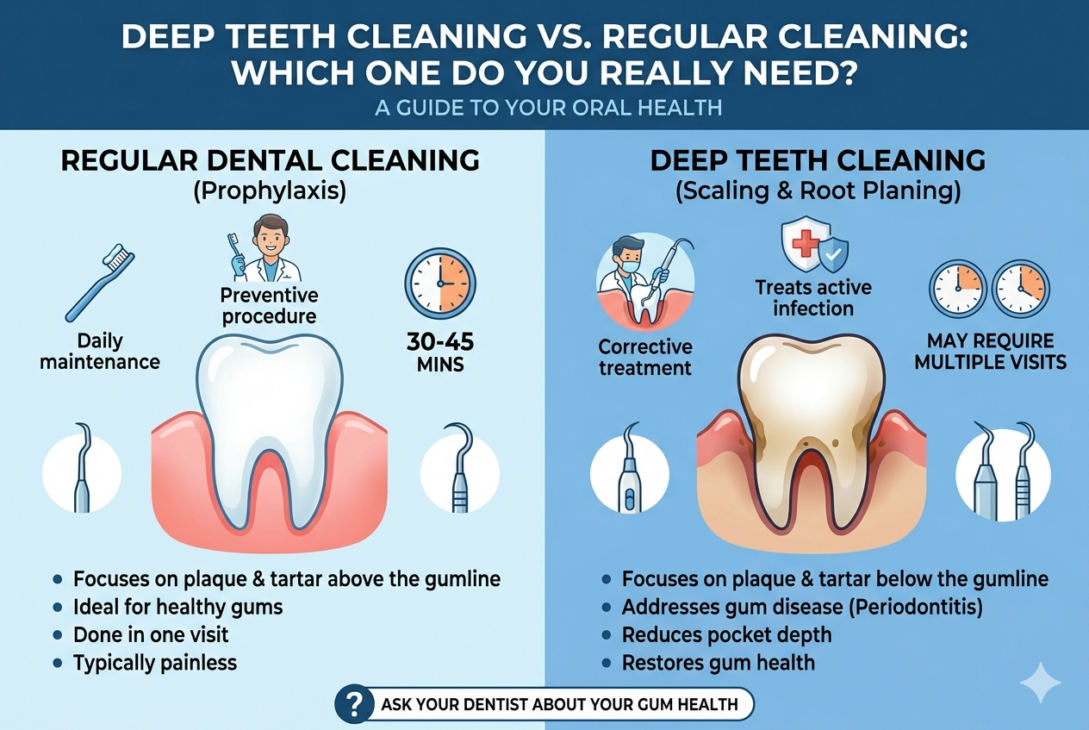
An ordinary cleaning, more commonly known as prophylaxis, is a preventive procedure. During this visit, the dentist will clean your teeth to remove plaque and tartar from the surfaces of your teeth and just below the gumline.
This process typically takes 30 to 45 minutes to perform scaling, polishing, and flossing. It is simple, easy and mostly does not require anesthesia.
This type of cleaning is ideal for patients with healthy gums, minimal to no pocket depth, and no signs of active infection. During this cleaning, your dentist also looks for early signs of cavities or gum problems, which should be addressed early to prevent bigger problems later.
What is A Deep Clean, and When Is A Deep Clean Needed?
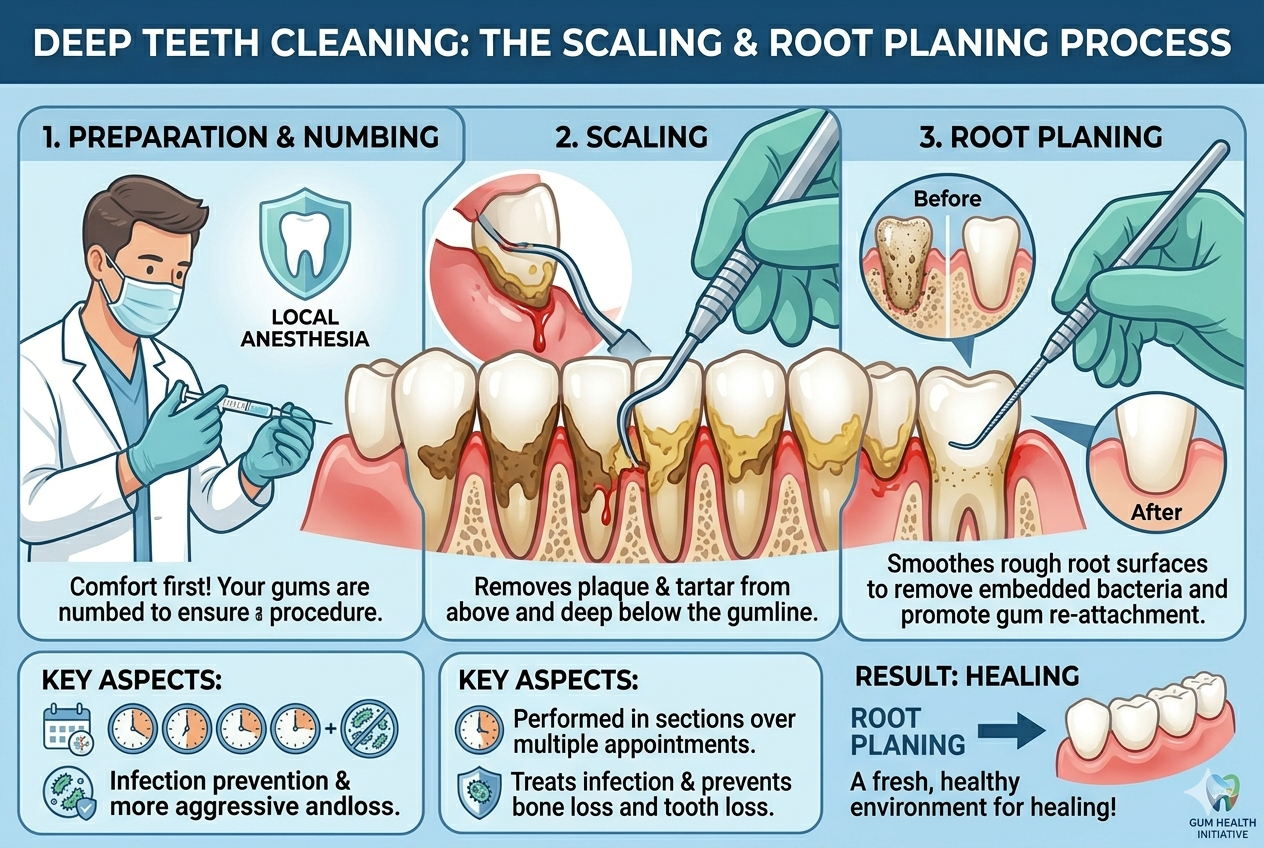
When gum disease is present, a more extensive procedure is needed. Ground teeth cleaning is just what you require right here. It more than just scrapes away–it goes deep into the gum l pockets and along the roots of the teeth, targeting bacteria and hardened deposits.
Instead of one visit, this treatment is typically performed in sections of the mouth over several visits. A dentist will clean beneath the gumline and smooth any rough edges on the roots, and local anesthesia is typically used to prevent discomfort.
It is not an aesthetics game — it is literally infection prevention. No treatment allows bacteria to proliferate, causing the gums to recede and the jawbone to degrade, resulting in loose or missing teeth.
The Fundamental Distinction Between the Two
The main difference between — even bigger business — is in purpose. A regular clean is only preventative; a deep clean is corrective.
Preventive care is about maintaining good oral health and preventing problems from arising. On the other hand, if the disease has already occurred, it requires corrective treatment. Routine cleanings just don’t cut it when it comes to treating gum disease—it needs to be treated much deeper.
An essential difference shows in the degree of care. Surface cleaning addresses all visible buildup, while deeper procedures address issues below the gumline, where most major problems start.
How To Tell If You Need More Than A Routine Cleaning
Something is off, and your mouth usually communicates very well. Brushing or flossing can also trigger bleeding, a mouth that always smells bad, or gums that pull away from your teeth; these are all early warning signs.
Sensitivity, loose teeth, or spaces between teeth and gums may indicate that gum disease is advancing. We should do more than just basic cleaning, as these changes indicate deeper problems.
The dentist then validates the need for advanced treatment by measuring pocket depth and obtaining imaging to assess bone health.
Modern Advancements Making Treatments Easier
Modern dental technology has improved the comfort and effectiveness of both preventive and advanced treatments.
Recent ultrasonic tools have made tartar removal much more accurate and much less painful to the patient. The use of laser-assisted techniques promises less bleeding and quicker recovery by reducing bacterial load. Air polishing systems wash stains away with air and water, leaving the tooth smooth without harming the enamel.
Also, the new tools allow the dentist to diagnose issues earlier than ever, so the individual can take preventive steps to restore health before conditions worsen.
What You Get with Each Method
Getting them done regularly contributes to your dental wellness. They help prevent cavities, gum disease, and more, and help you maintain your smile. These are easy, fast, and extremely powerful when practiced regularly.
The deeper treatments, on the other hand, are intended to halt the progression of the disease. They promote healing, reduce pocket depth, and protect the bone that supports your teeth. Although they take longer and are more meticulous, they preserve the natural tooth structure and help stave off more invasive techniques.
Can You Avoid Deep Cleaning?
Most likely, yes, assuming you keep your daily habits in check and stay up to date on dental appointments. Most importantly, good oral hygiene habits can go a long way in avoiding gum disease before it ever starts.
Daily brushing, flossing, and supportive devices such as mouthwash and interdental cleaners remove plaque. Keeping your gums healthy requires drinking enough water while also maintaining a healthy diet.
The sooner you begin corrective measures and develop a plan to remedy the situation, the easier it is to remain in the preventative stage.
FAQs
How Can I Tell if I Need a Deep Cleaning?
Your dentist will check the gum pocket depth and for signs of bone loss. Where pockets are deeper than normal or an active infection is present, smart cleaning may be recommended.
Is deep cleaning painful?
The procedure is usually painless with local anaesthesia. You may experience some mild sensitivity or soreness afterward, but this is temporary.
Just how often should you get routine cleanings?
But for most, a cleaning every six months is sufficient. People with gum problems may require more frequent visits.
Does gum disease go away with regular cleaning?
No. Burns explains that once gum disease has progressed beyond the early stage, more extensive treatment is needed to remove bacteria below the gumline.
What If I Wish To Delay Therapy?
Waiting to seek care means the infection has had time to spread, which can lead to tooth loss and more costly interventions down the line.
Which Route Will You Take for Better Oral Health?
Your choice isn’t between routine cleaning and deeper treatment; the conditions in your mouth dictate it. Spotting the first signs and remaining consistent with care can make all the difference.
Healthy gums are not a coincidence. These are the products of the right care at the right time.