
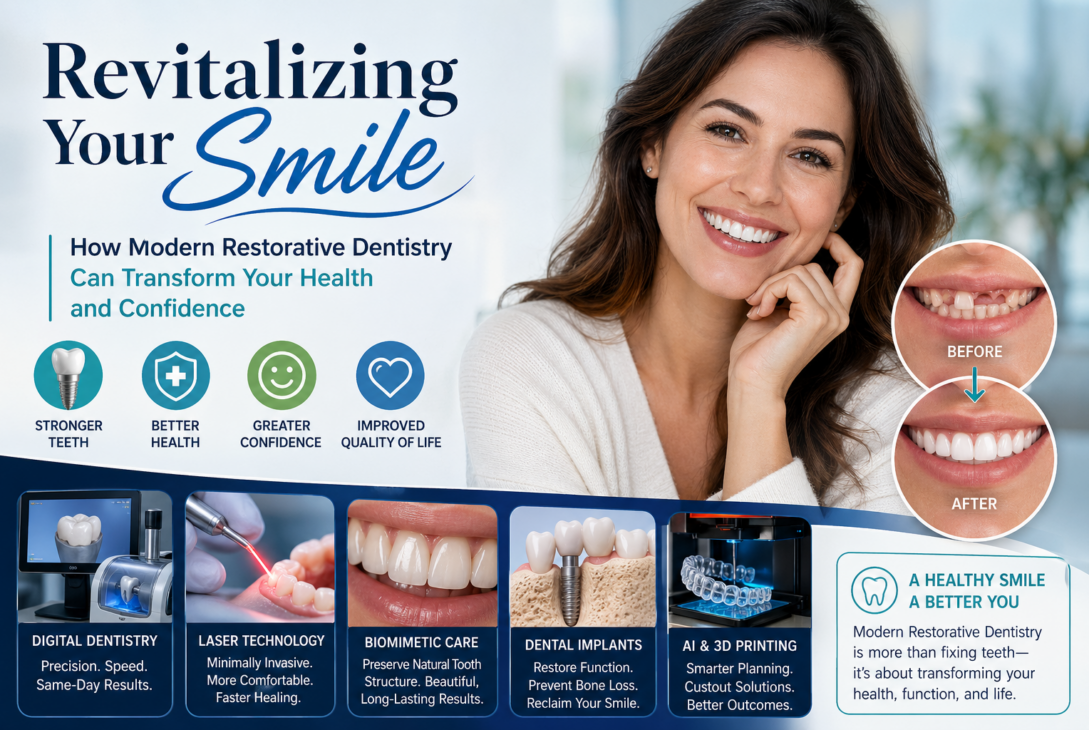
Most individuals think of dental services strictly in terms of repairing cavities and replacing teeth. However, current Restorative Dentistry involves so much more. It is about totally transforming your health, comfort, and self-assurance. Thanks to advances in dentistry, teeth can be restored and the patient’s natural smile protected, while improved self-assurance is a bonus.
The Benefits of a Full Functional Smile
Most people do not realise the enormous impact on a person’s overall health once the smile is restored. The body can negatively compensate in multiple ways when the mouth is full of missing, broken, or damaged teeth.
- Digestion will be more difficult.
- The jaw will be out of alignment, resulting in TMJ and other types of headaches.
- Periodontal disease will be a result of poor oral hygiene
- The bacteria in the mouth will cause systemic inflammation
The most significant and best dental procedure is the dental implant. It is the most current and best way to replace missing teeth. It is the only option that keeps the jawbone alive where the tooth is missing. Other options allow the bone to die. The implant acts as a tooth root, preserving the bone and the overall face. Many patients have stated they experience:
- Easier chewing
- Less pain in the jaw
- Improved digestion
- Increased comfort overall
A healthy body is a result of a healthy bite.
The Emotional Aspect of Smile Restoration
When it comes to chipped, stained, or missing teeth, the effect is an almost unnoticeable loss of confidence. You may smile less, change the way you speak, or avoid pictures. It adds up. Today’s restorative materials are nothing like the bulky or obvious solutions of the past. Nano-hybrid composites replicate the translucency of enamel. Staining is also not an issue with high-strength ceramics, which reflect light like a natural tooth. The amount of tooth structure removed with advanced veneers and crowns is less than ever. Patients who complete a full smile rehabilitation report increased outgoing and self-assured behaviour. Not thinking about your teeth changes everything about you, affecting your job, business, and social relationships.
Speed, Accuracy, and Digital Dentistry
Modern dental care has been transformed by CAD/CAM technology. It is, without a doubt, one of the most useful tools in a clinician’s dental care arsenal. Using intraoral cameras, rather than traditional impression methods, practitioners can obtain an accurate representation of the dental arch at a single point in time. This digital file is then used to guide the crown or bridge, which is milled with high accuracy in one day. Here’s how it compares:
- Multi-week wait vs Same-day results
- Physical moulds vs Comfortable digital scan
- Higher remake rates vs Precision fit
- Temporary crowns vs. permanent restoration, same day
Fewer appointments. Less discomfort. Greater accuracy. For busy professionals and families, that efficiency matters.
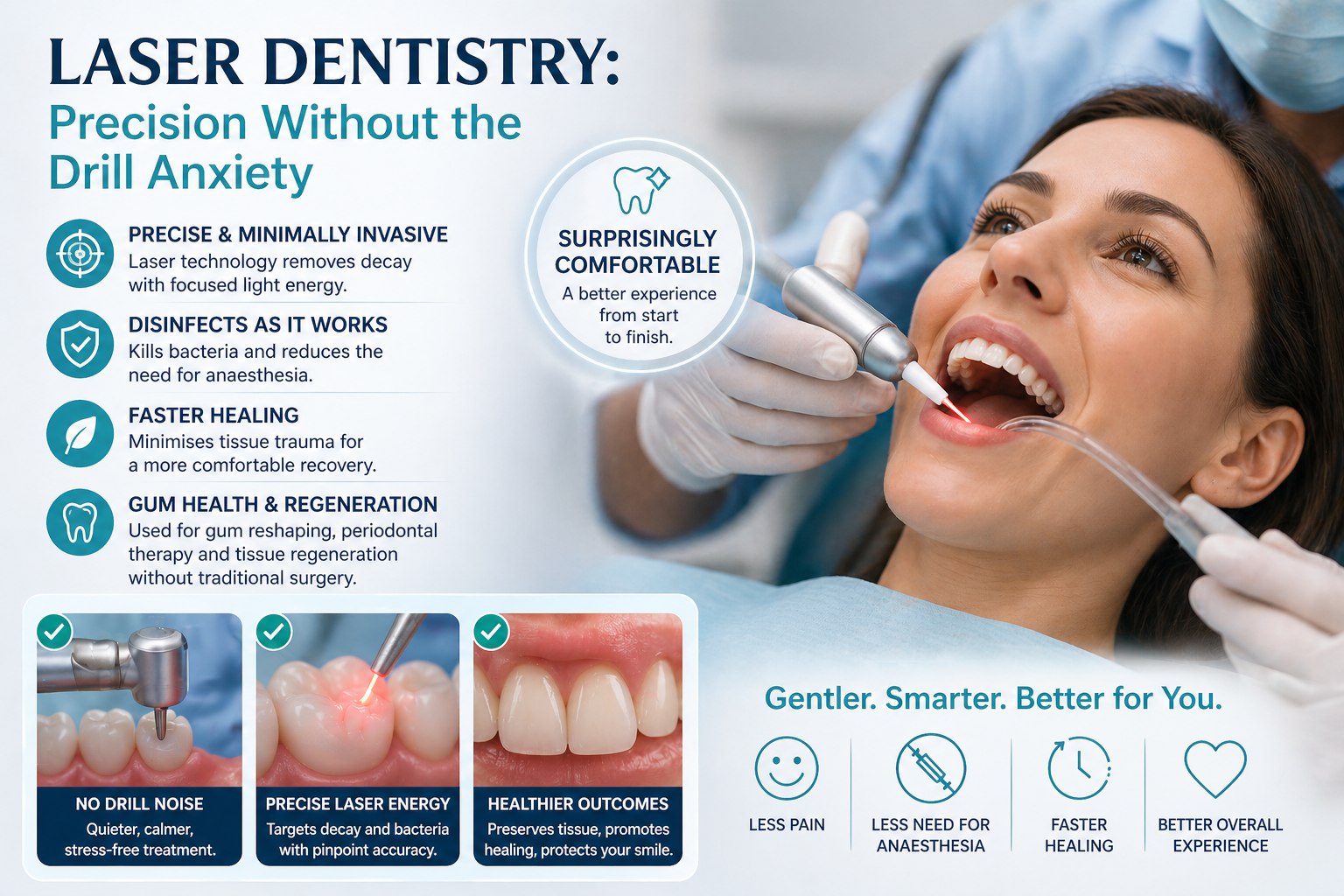
Laser Dentistry: Precision Without the Drill Anxiety
If you’ve ever avoided treatment because of the sound of a drill, you’re not alone. Laser technology allows clinicians to remove decay with focused light energy. It disinfects while it works, often reducing the need for anaesthesia. Healing is typically faster because the tissue trauma is minimised. Lasers are also used for gum reshaping and periodontal therapy. Regenerative laser procedures help preserve gum tissue and support restorative work without traditional surgery. Patients frequently describe it as surprisingly comfortable—and that changes the entire dental experience.
Biomimetic Techniques: Preserving Natural Tooth Structure
Modern dentistry isn’t about aggressive removal. It’s about conservation. Biomimetic methods replicate the structure of natural teeth by layering materials that mimic enamel and dentine. These bonded restorations preserve significantly more of the natural tooth than traditional crowns. Other less invasive options are:
- Air abrasion, which is less intense than other methods of decay removal
- Ultra-thin veneers, which don’t require much enamel removal, if at all
- Adhesive restorations, which help strengthen damaged teeth
Materials for this type of work should last 15–20 years or longer, if maintained properly. This durability lowers future costs and requires fewer retreatments.
Dental Implants and Full-Arch Rehabilitation
What if you are missing several teeth? This is where modern technology excels. Innovative implant systems integrate easily with the bone and provide adequate support for crowns, bridges, or complete-arch restorations. The maintenance and placement of these systems is highly regarded. Full-arch options give patients who previously had removable dentures the opportunity to have fixed teeth in days. This allows for no slippage, no adhesive use, and no food restrictions. In addition to the aesthetic restoration, the implants provide:
- Protection against bone loss
- Preservation of the face
- Restoration of the ability to chew
- Restoration of the ability to speak clearly
For many, this is more than just dental work; it is a new beginning.
AI and 3D Printing: The Future is Here
AI is now being utilized for the interpretation of scans and the prediction of bite relationships. This allows for highly customised treatment outcomes. 3D printing, along with AI, allows the in-house production of:
- Night guards
- Temporaries
- Guides
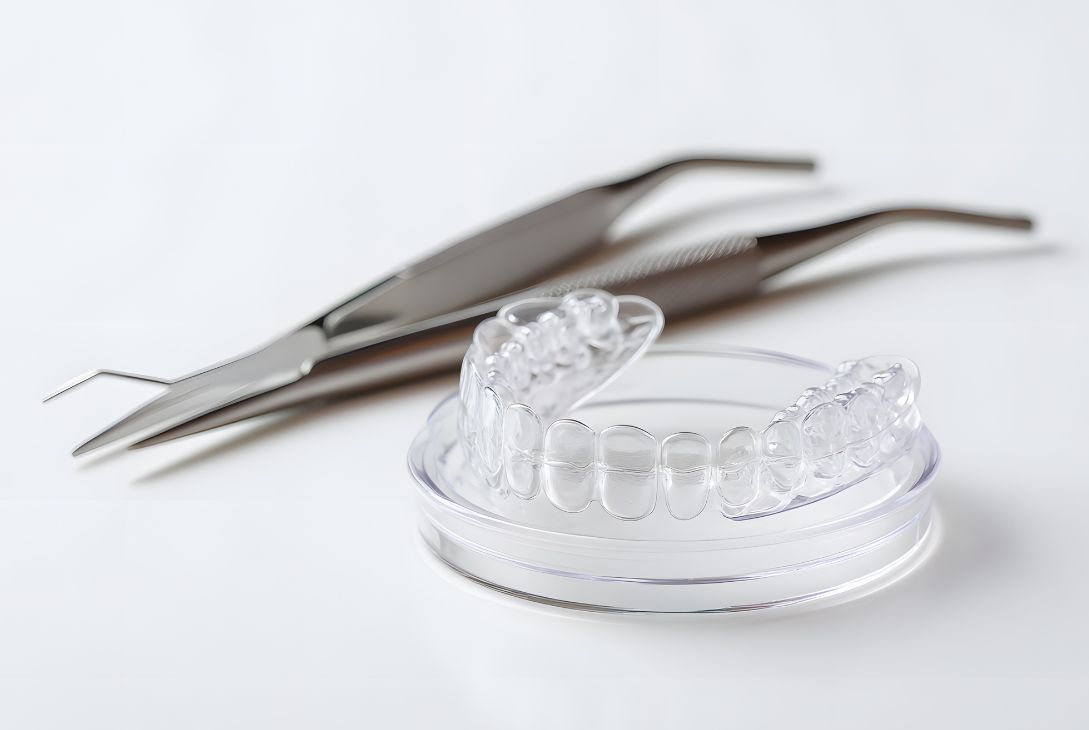
- Clear aligners
With the level of customisability available today, outcomes are improved, and complications are reduced.
Caring for Your Restored Smile
Restoring your smile is just the beginning; caring for your smile is the most important part. Daily care includes:
- Brushing with special remineralisation toothpaste
- Frequent flossing
- Grinding night guards
Dental services include:
- Regular cleanings
- Provision of bite guards
- Periodic X-rays to measure infection/decay around the implant
Restorative services are comparable to high-performing vehicles; an investment is necessary for protection. With proper care, most high-quality restorations last 15-25 years or more.