
Gum disease doesn’t announce itself with a dramatic warning. In most cases, it develops quietly, no sharp pain, no obvious swelling, until the damage is already significant. By the time many patients realize something is wrong, the infection has spread deep beneath the gumline and into the bone that supports their teeth.
That’s why knowing the early signs matters so much. Getting periodontal treatment at the right time can mean the difference between a simple cleaning and a complex surgical procedure, or worse, tooth loss. This article walks you through the warning signs your gums may be sending you, and what to do before the situation gets harder to reverse.
What Is Periodontal Disease?
Periodontal disease, commonly called gum disease, is a bacterial infection that attacks the gum tissue and bone surrounding your teeth. It begins as gingivitis, a mild, reversible form of inflammation caused by plaque buildup along the gumline. If left untreated, it progresses into periodontitis, a more serious condition that destroys the supporting structures of your teeth.
According to the Centers for Disease Control and Prevention (CDC), nearly half of adults aged 30 and older show signs of some form of gum disease. Many don’t know they have it.
Early Warning Signs You Shouldn’t Ignore
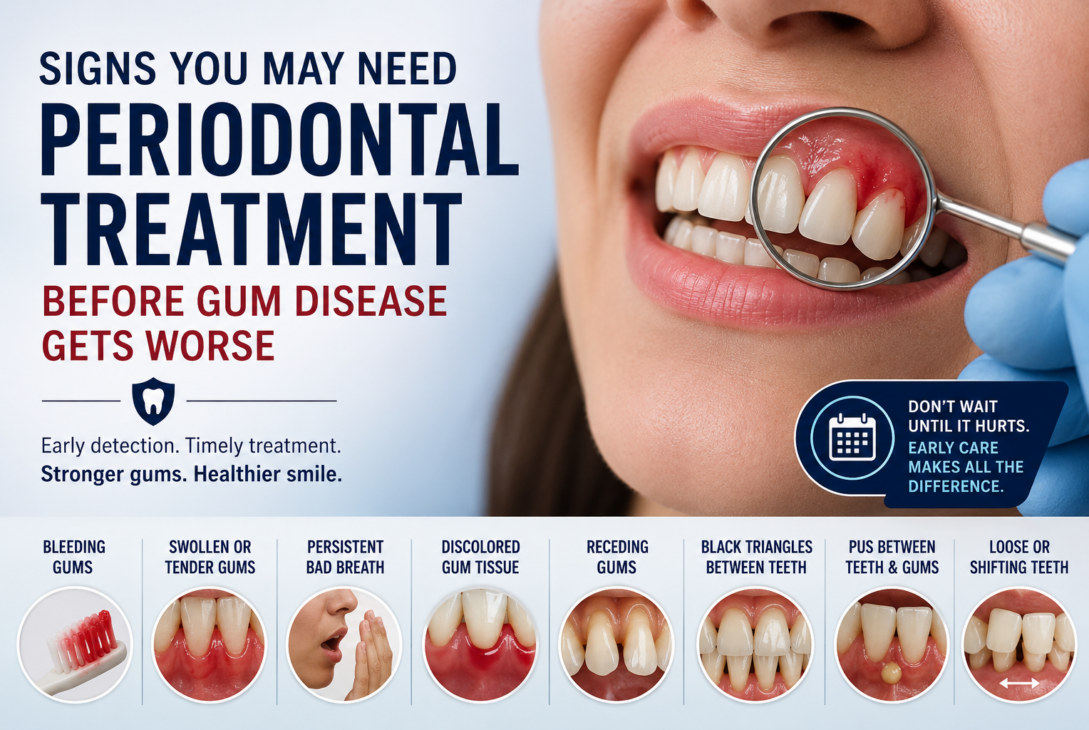
1. Bleeding Gums
Healthy gums don’t bleed. If you notice pink-tinged saliva after brushing, or blood on your floss, that’s your body signaling inflammation.
Bleeding is one of the first and most common signs of gingivitis. It happens because the bacteria in plaque irritate gum tissue, causing it to become swollen and fragile. Many people dismiss this as brushing too hard, but consistent bleeding, even with gentle pressure, warrants a professional evaluation.
2. Swollen or Tender Gums
Take a look at your gums in the mirror. They should appear firm, pale pink, and hug the base of each tooth snugly. If they look puffy, feel sore when you press them, or appear red and inflamed, infection may already be at work.
Swelling is your immune system’s response to bacterial invasion. The gum tissue fills with fluid as the body tries to fight off the bacteria, a visible and often uncomfortable sign that periodontal treatment may be needed.
3. Persistent Bad Breath
Everyone experiences bad breath occasionally, but chronic halitosis that doesn’t go away after brushing and using mouthwash is a red flag. Bacteria trapped beneath the gumline produce sulfur compounds that cause a persistent, unpleasant odor.
If you find yourself constantly reaching for mints or gum throughout the day, the root cause may be gum disease rather than diet or dry mouth.
4. Discolored Gum Tissue
Gum tissue that has turned bright red, deep red, or purplish is showing signs of active infection. Healthy gums have a consistent, coral-pink tone. Discoloration, especially when paired with bleeding or swelling, is a strong indicator that bacteria have established themselves below the surface.
Progressing Symptoms: When Gingivitis Becomes Periodontitis
If the early signs above go untreated, the disease advances. At this stage, the damage is no longer limited to soft tissue, it begins to affect the bone that holds your teeth in place.
5. Receding Gums
One of the hallmark signs of advancing periodontal disease is gum recession. Your teeth may appear longer than they used to, or you might notice a visible gap where your gum meets the tooth root. This happens because the gum tissue pulls back as the infection damages it.
Exposed tooth roots are more sensitive to temperature and more vulnerable to decay. Recession also indicates that bone loss may already be occurring beneath the surface.
6. Black Triangles Between Teeth
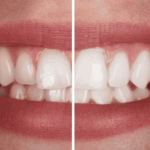
Have you noticed small dark triangular spaces forming between your teeth near the gumline? These are called black triangles or open gingival embrasures. They appear when the interdental papilla, the small triangle of gum between each tooth, shrinks or disappears due to bone loss and tissue damage.
While these gaps can sometimes be cosmetic in nature, their sudden appearance is often tied to progressing periodontal disease.
7. Pus Between Teeth and Gums
Seeing or tasting pus near your gumline is a serious symptom. Pus is a sign of an acute or aggressive infection, and it means bacteria have overwhelmed the tissue and created an abscess or active pocket of infection.
Do not wait on this symptom. It requires prompt professional attention. Visit a dental provider or periodontist as soon as possible if you notice this sign.
8. Loose or Shifting Teeth
In the later stages of periodontitis, bone loss becomes significant enough to destabilize teeth. You may notice that a tooth feels slightly loose, or that your bite feels different than it used to. Teeth may begin to drift or shift out of alignment.
This level of damage can lead to tooth loss if not treated immediately. Periodontal treatment at this stage typically involves more intensive procedures such as scaling and root planing, bone grafting, or surgical intervention.
Who Is Most at Risk?
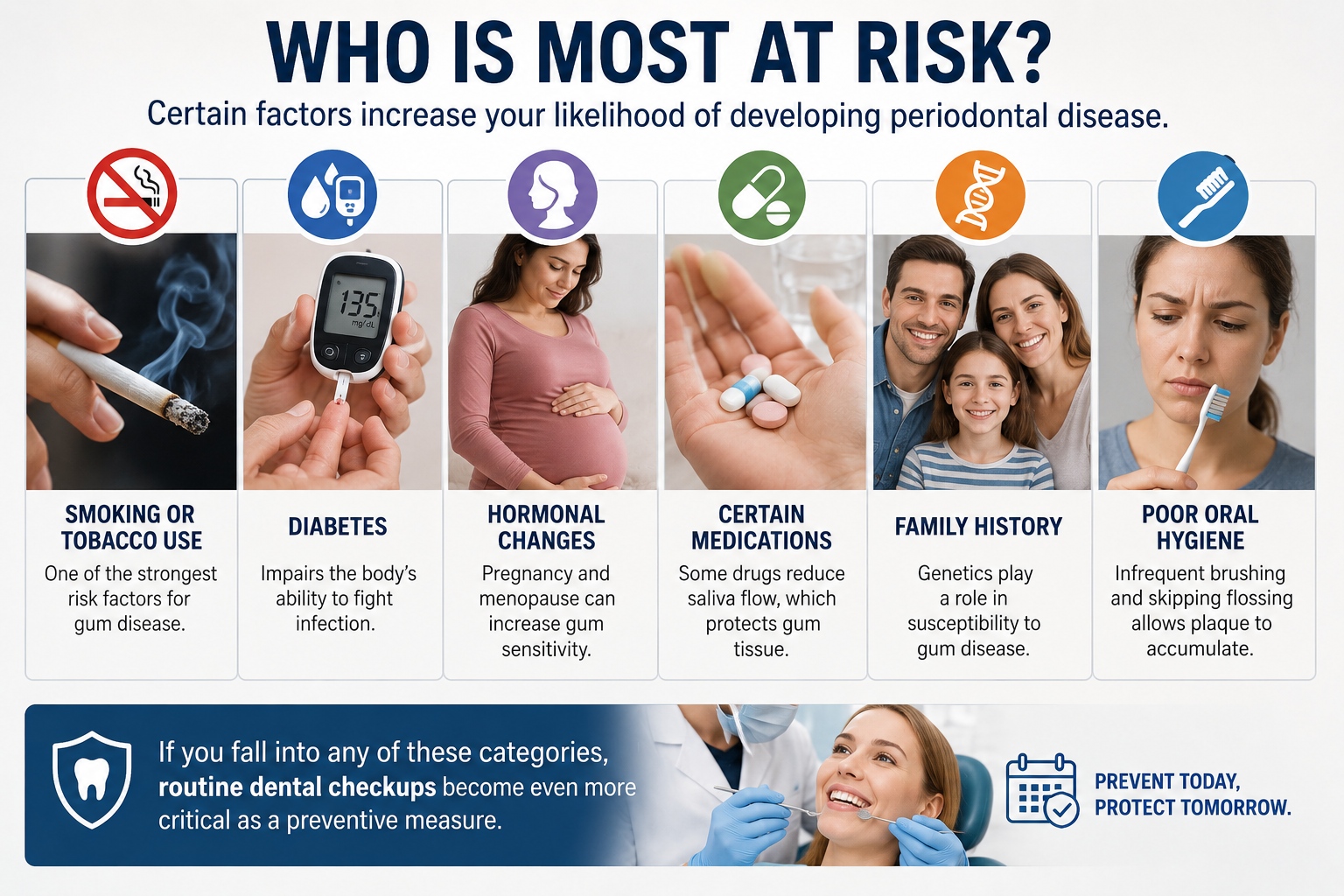
Certain factors increase your likelihood of developing periodontal disease:
- Smoking or tobacco use — one of the strongest risk factors
- Diabetes — impairs the body’s ability to fight infection
- Hormonal changes — pregnancy and menopause can increase gum sensitivity
- Certain medications — some drugs reduce saliva flow, which protects gum tissue
- Family history — genetics play a role in susceptibility
- Poor oral hygiene — infrequent brushing and skipping flossing allows plaque to accumulate
If you fall into any of these categories, routine dental checkups become even more critical as a preventive measure.
What Periodontal Treatment Involves
If caught early, treatment can be as simple as a professional dental cleaning and improved home care. For more advanced cases, your dentist or periodontist may recommend:
- Scaling and root planing — a deep cleaning that removes tartar and bacterial deposits from beneath the gumline
- Antibiotic therapy — applied locally to infected gum pockets
- Surgical procedures — such as flap surgery or bone grafts for severe bone loss
- Laser therapy — a minimally invasive option for certain cases
The right treatment depends entirely on the severity and extent of the disease. Only a dental professional can assess your gum health accurately through a clinical exam and X-rays.
Don’t Wait for Pain to Act
The most dangerous aspect of gum disease is that it rarely hurts, at least not until it’s far advanced. Pain is not a reliable indicator of health when it comes to your gums.
If you’ve noticed any of the signs described above, bleeding, swelling, recession, bad breath, or loose teeth, schedule a dental evaluation today. Early intervention is always less invasive, less costly, and far more effective than waiting.
Your smile is worth protecting. Talk to your dentist about a periodontal evaluation, and ask whether a referral to a periodontist is right for your situation.