
If you’re missing one or more teeth, you’ve probably asked yourself the same question thousands of patients ask every year: are dental implants really worth it? For most people, the answer is yes. Implants are the only tooth-replacement option that replaces the entire tooth — root and all — which is why dentists consider them the gold standard for a missing tooth. They cost more upfront and take longer to complete than a bridge or a denture, but with a clinical success rate around 95%, and a titanium post that can genuinely last a lifetime, they usually pay for themselves in comfort, function, and confidence over the years. Below, we’ll walk through exactly what makes this treatment worth the investment, what the process looks like from start to finish, and what recovery really feels like.
Key Benefits of Choosing an Implant Over Other Options
A missing tooth affects more than your smile — it changes how you chew, how you speak, and even the shape of your jaw over time. Here’s why so many patients and dentists lean toward implant-supported tooth replacement:
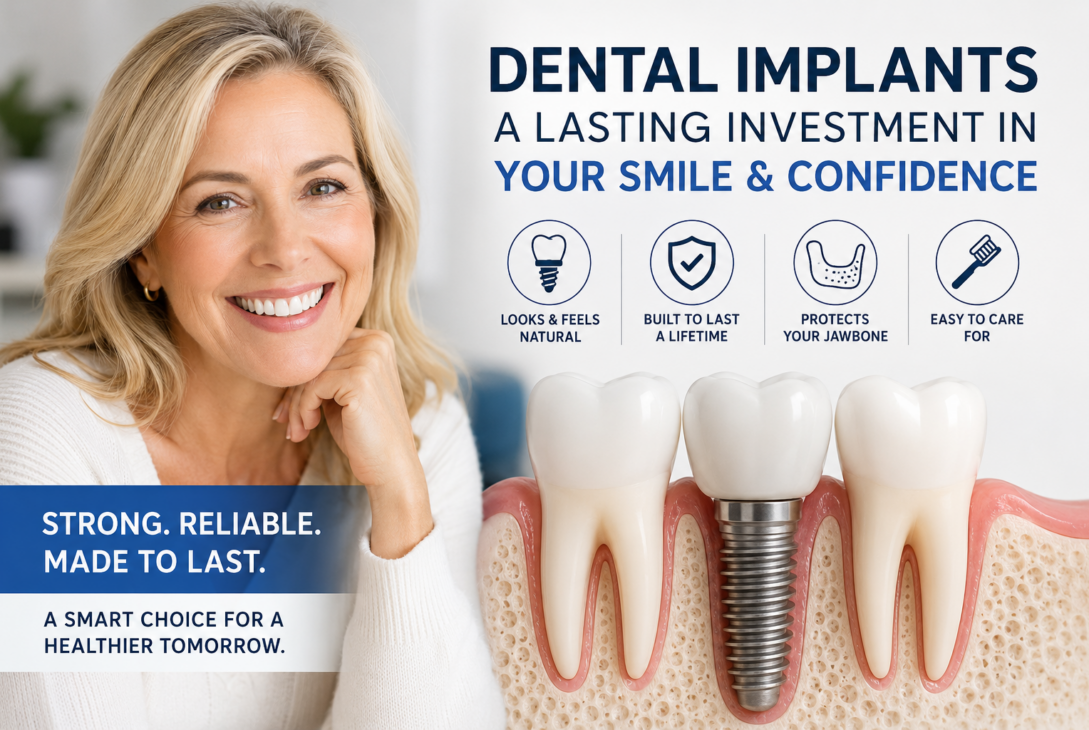
- Protects your jawbone. An implant post acts like a natural tooth root. It stimulates the jawbone every time you bite down, which helps prevent the bone loss that leads to a sunken or aged facial appearance — something bridges and dentures can’t do.
- Leaves healthy teeth alone. A traditional bridge requires grinding down the teeth on either side of the gap to support it. An implant stands on its own, so your neighboring teeth stay untouched.
- Restores full chewing power. Because the post fuses directly with the bone, an implant-supported crown lets you bite into an apple or crunch through ice without the slipping or discomfort common with removable dentures.
- Built to last. The titanium implant post can last a lifetime once it fuses with the bone, a process called osseointegration. The porcelain crown on top typically lasts 10 to 15 years before it needs replacing.
- Easy to care for. There are no special adhesives, soaking solutions, or overnight removal involved. You simply brush and floss an implant the same way you would a natural tooth.
The Dental Implant Procedure: What Actually Happens
Getting a tooth implant isn’t a single visit — it’s a staged process that typically takes 3 to 9 months from start to finish. That timeline may sound long, but each stage exists to make sure the implant has a stable, healthy foundation that will hold up for decades.
- Consultation and 3D imaging. Your dentist or oral surgeon uses CBCT (cone-beam CT) scans to check your bone density and map out the exact spot for placement.
- Extraction or bone grafting, if needed. If the damaged tooth is still in place, it’s removed first. Patients with thin or weakened jawbone may need a bone graft, which typically requires a few months of healing before implant surgery can move forward.
- Implant placement surgery. Under local anesthesia (or sedation, if preferred), the surgeon places a small threaded titanium post directly into the jawbone.
- Osseointegration — the healing phase. This is the waiting period, usually 3 to 6 months, during which the jawbone naturally fuses around the titanium post. A temporary crown or partial denture can be worn in the meantime so you’re never left without a tooth.
- Abutment and final crown. Once the post has fully bonded with the bone, a small connector piece called an abutment is attached, and a custom, color-matched porcelain crown completes the restoration.
Recovery Timeline: What to Expect After Surgery
Recovery is usually much easier than people expect, especially compared to the anxiety many patients feel going in.
- Days 1–3: Mild swelling, some bruising, and a dull ache are normal. Over-the-counter pain relievers like ibuprofen and ice packs are usually enough to manage it.
- Days 4–7: The gum tissue heals quickly. Most patients return to work or their normal routine within 24 to 48 hours after surgery.
- Weeks 1–2: Stick to soft foods — think smoothies, yogurt, mashed potatoes, and soup — to avoid putting pressure on the surgical site while it settles.
- Ongoing adjustment: After your final crown is placed, expect a short period where your tongue and bite adjust to the new tooth’s shape, weight, and feel. This settles in within a few weeks for most patients.
Dental Implants vs. Bridges vs. Dentures
Every tooth-replacement option involves a trade-off between cost, time, and long-term function. Here’s how the three most common choices stack up:
| Feature | Dental Implant | Dental Bridge | Traditional Denture |
| Lifespan | Lifetime (post) / 10–15 years (crown) | 5 to 10 years | 5 to 7 years |
| Bone Protection | Yes — prevents bone loss | No | No — can speed up bone loss |
| Impact on Other Teeth | None — stands on its own | Requires shaving healthy teeth | None |
| Treatment Time | 3 to 9 months | 2 to 3 weeks | 3 to 6 weeks |
| Upfront Cost | Highest | Moderate | Lowest |
Frequently Asked Questions
Are dental implants worth the cost in the long run? Yes, for most patients. Implants cost more upfront than a bridge or denture, but since the titanium post can last a lifetime and doesn’t need to be replaced every few years, the long-term cost per year of use is often lower than repeatedly replacing a bridge or denture.
How painful is getting a tooth implant? Most patients describe the procedure itself as pain-free thanks to anesthesia, and the recovery discomfort afterward is typically mild and manageable with over-the-counter medication — similar to what you’d feel after a tooth extraction.
Can you get an implant if you have bone loss? Often, yes. If a scan shows the jawbone is too thin to support an implant, a bone graft can rebuild the area first. It adds a few months to the timeline but doesn’t rule out treatment.
What is the success rate of dental implants? Clinical studies consistently report success rates around 95% for single-tooth implants, making them one of the most predictable procedures in modern dentistry when placed by a qualified provider.
How long does the entire implant process take? Most cases take between 3 and 9 months from the initial consultation to the final crown, depending on whether extraction or bone grafting is needed beforehand.
Who Is a Good Candidate for an Implant?
Most healthy adults with enough jawbone to support the post are good candidates for implant treatment. Good candidates generally have healthy gums, no uncontrolled gum disease, and enough bone density to anchor the titanium post — or the ability to build that density with a bone graft. Conditions like uncontrolled diabetes or heavy smoking can slow healing and lower success rates, so it’s worth discussing your full medical history with your dentist before moving forward. Age alone isn’t a barrier — implants are placed successfully in patients well into their senior years, as long as the jawbone and gum tissue are healthy enough to support the process.
Cost is often the biggest deciding factor for patients weighing implants against a bridge or denture. While the upfront price is higher, many dental offices offer financing plans, and some dental insurance plans now cover a portion of implant treatment, especially when it’s considered medically necessary rather than purely cosmetic. It’s worth asking your provider for a full breakdown of costs, including the post, abutment, and crown, since these are sometimes billed as separate stages rather than one flat fee.
The Bottom Line
Choosing between an implant, a bridge, and a denture ultimately comes down to how you weigh upfront cost against long-term value. For patients who want a permanent, natural-feeling solution that protects the jawbone and doesn’t affect neighboring teeth, dental implants remain the option most dentists recommend. If you’re considering implant treatment, a consultation with a qualified implant dentist or oral surgeon is the best next step — they can evaluate your bone health, walk you through cost, and confirm whether you’re a good candidate.