
Biting into something hard and hearing an unexpected crack is enough to make anyone’s stomach drop. The good news? Not every cracked or broken tooth spells disaster.
With the right cracked tooth treatment, many damaged teeth can be repaired and kept in place for years to come. Others, unfortunately, are too far gone to save.
So how do you know which situation you’re in? The answer depends on how deep the damage runs, where it’s located, and how quickly you act.
Why a Cracked or Broken Tooth Needs Fast Attention
Tooth enamel is the hardest substance in the human body, but it isn’t indestructible. A hard fall, a sports injury, grinding at night, or simply biting down on a piece of ice can all lead to a tooth fracture.
Unlike a cut on your skin, a cracked tooth cannot heal on its own. Left untreated, even a small crack tends to spread, allowing bacteria to reach the inner nerve and cause infection.
That’s why dentists recommend getting any cracked tooth symptoms checked out right away, even if the pain seems mild at first.
Common Cracked Tooth Symptoms to Watch For
Cracks aren’t always visible to the naked eye, especially if they’re small or located between the teeth. Instead, pay attention to how your tooth feels:
- Sharp pain when chewing or releasing a bite
- Sensitivity to hot, cold, or sweet foods
- Intermittent pain that comes and goes
- Swelling in the gum around a specific tooth
If you notice any of these signs, especially after an impact or injury, it’s worth scheduling a dental exam as soon as possible.
How Dentists Decide: Can the Tooth Be Saved?
Not all cracks are created equal. A hairline crack in the enamel is a very different problem than a broken molar split down to the root. Dentists generally evaluate three things before recommending a treatment plan.
1. How Deep Does the Crack Go?
Damage that stays above the gumline is far easier to treat than a crack that extends below it. Once a fracture reaches the root, the odds of saving the tooth drop significantly.
2. Is There Enough Healthy Tooth Left?
Even a deep crack can sometimes be treated if enough solid tooth structure remains to support a crown or filling. If too much of the tooth has broken away, there may not be anything left to rebuild.
3. Has the Nerve Been Affected?
A crack that reaches the pulp (the tooth’s nerve center) usually causes noticeable pain and sensitivity. The nerve can often be treated with a root canal for cracked tooth cases, but only if the surrounding structure is still stable.
Treatment Options When the Tooth Can Be Saved
If your dentist determines the tooth is salvageable, treatment usually falls into one of these categories, depending on severity.
Minor chips and surface cracks are often treated with simple dental bonding, restoring the tooth’s shape in a single visit.
A broken chewing surface, sometimes called a fractured cusp, usually calls for a dental crown. The crown caps the tooth, distributing bite pressure evenly and preventing the crack from spreading further.
Cracks that reach the pulp typically require root canal therapy to remove the damaged nerve tissue, followed by a crown to protect what remains of the tooth. This combination is one of the most common ways dentists save a cracked tooth that would otherwise be lost.
When a Tooth Extraction Becomes Necessary
Despite a dentist’s best efforts, some teeth simply cannot be saved. A tooth extraction typically becomes the recommended path when:
- The crack extends well below the gumline or into the root itself
- The tooth has split into two or more separate pieces
- An untreated infection has already destroyed surrounding bone
- The remaining tooth structure is too weak to support a crown
While losing a tooth is never welcome news, it’s often the healthier choice for your overall mouth. Leaving a severely cracked tooth in place risks spreading infection to neighboring teeth and jawbone.
If extraction is unavoidable, your dentist can walk you through replacement options such as dental implants or bridges, both of which restore function and appearance once healing is complete.
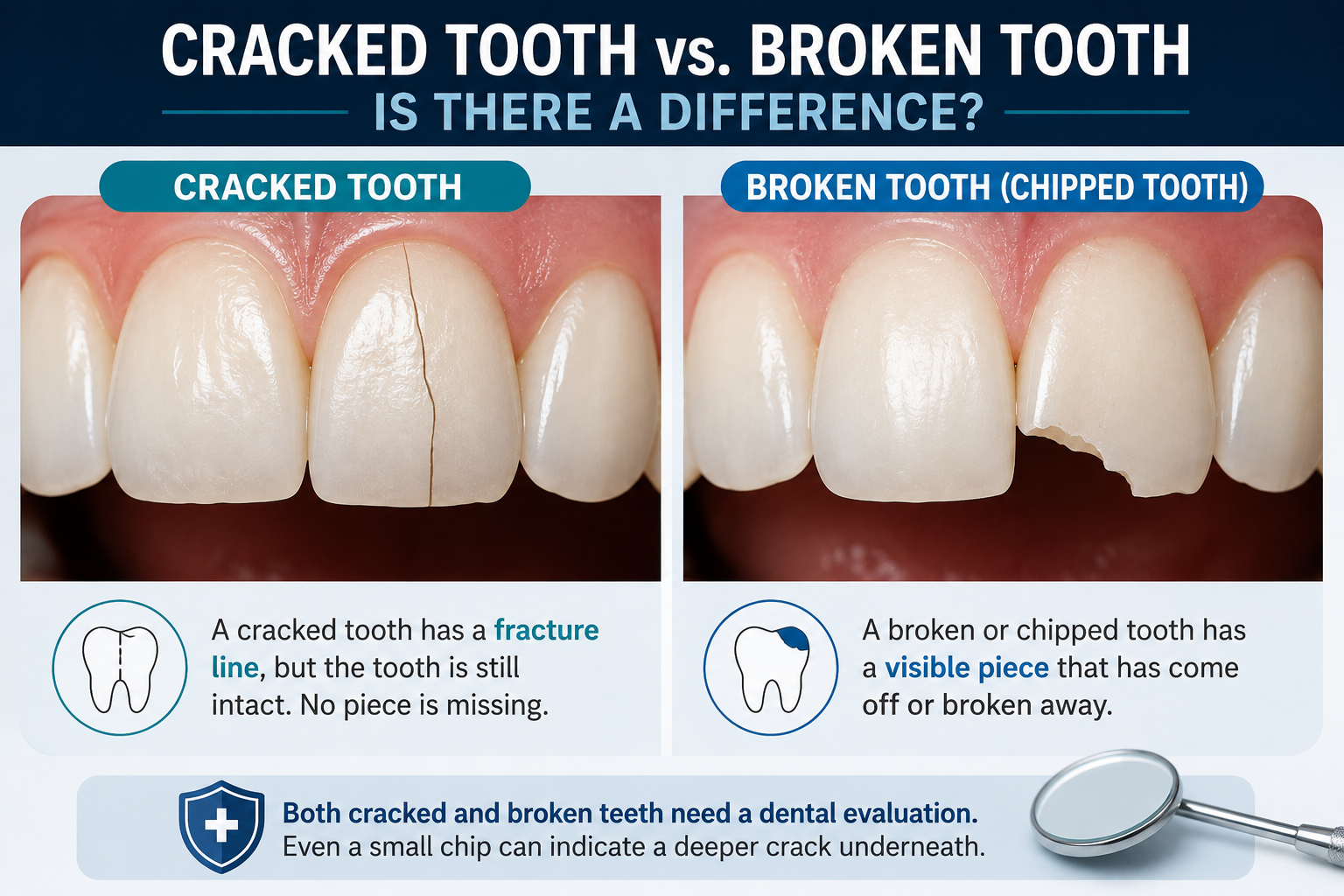
Cracked Tooth vs. Broken Tooth: Is There a Difference?
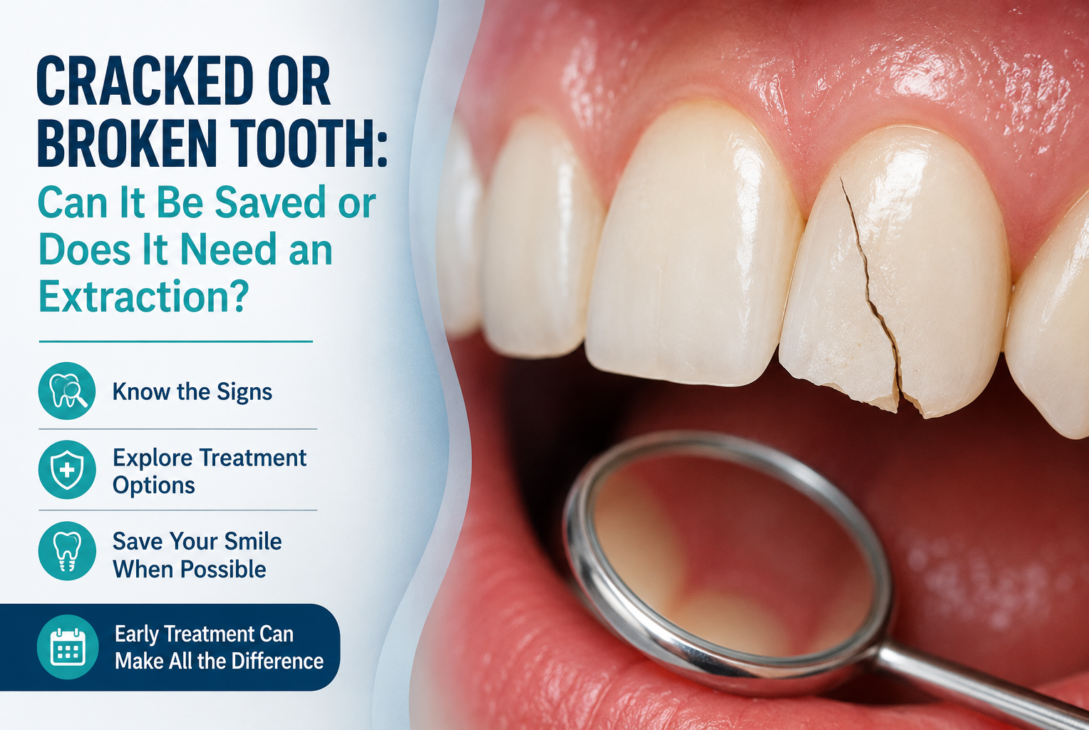
The terms are often used interchangeably, but there’s a subtle distinction. A cracked tooth usually refers to a fracture line that hasn’t fully separated the tooth, while a broken tooth or chipped tooth typically means a visible piece has already come off.
Both situations call for a dental evaluation, since even a small chip can be a sign of a deeper crack underneath the surface.
Warning Signs That Mean You Need Emergency Care
Some symptoms indicate the damage has progressed beyond a routine appointment. Seek emergency dental care immediately if you notice:
- Visible swelling in the gums, cheek, or face
- Severe, throbbing pain or a fever
- A loose tooth or a foul-tasting discharge
These symptoms often point to an active infection, which can spread quickly if left untreated.
Protecting Your Smile Starts With Early Action
A cracked or broken tooth doesn’t have to mean losing it for good. In many cases, prompt treatment, whether that’s bonding, a crown, or a root canal, can preserve your natural tooth and stop the damage from spreading.
The key is not waiting. The sooner a crack is diagnosed, the more treatment options remain on the table.
If you’re dealing with tooth pain or noticed a chip or crack after an injury, don’t wait for it to worsen. Schedule an evaluation with your dentist today to find out whether your tooth can be saved.