
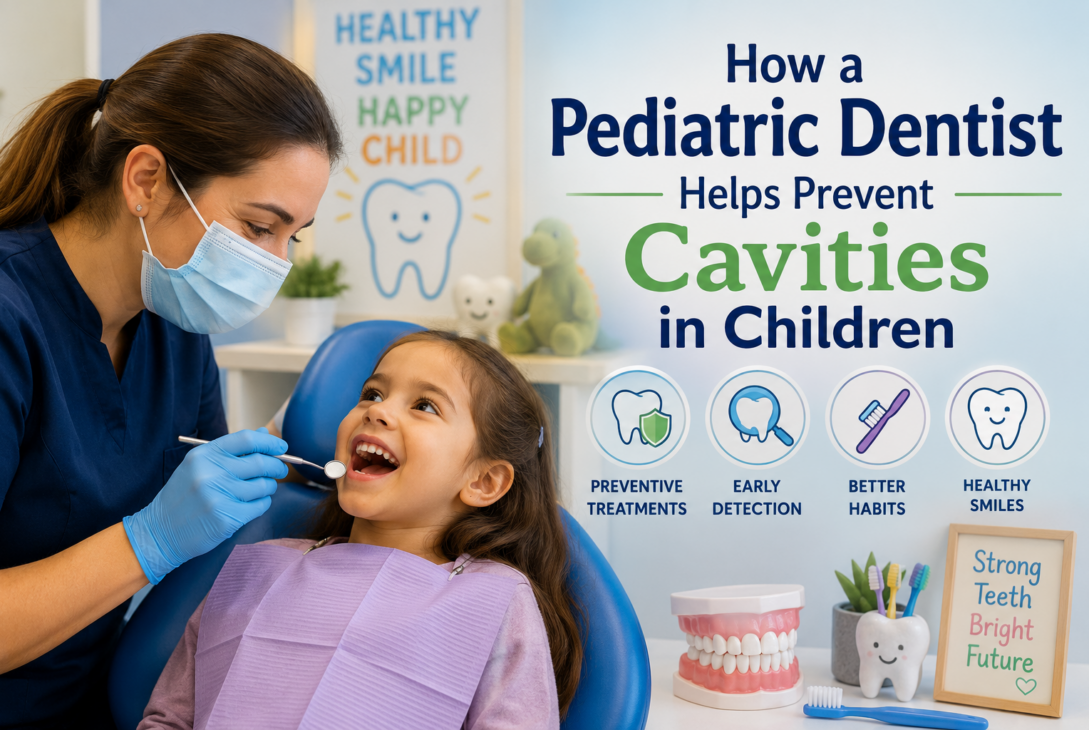
A child’s first cavity often starts long before a parent notices anything wrong. By the time a dark spot appears on a molar, the decay has usually been building for months. This is why pediatric dental care focuses so heavily on prevention rather than repair.
Pediatric dentists are trained specifically to protect young, developing teeth. They combine hands-on treatments, regular monitoring, and hands-on education to stop cavities before they start. Here’s how that process actually works.
Why Early Pediatric Dental Care Matters
Most dentists recommend a child’s first dental visit by their first birthday, or within six months of the first tooth erupting. That may sound early, but baby teeth play a bigger role than most parents realize.
Primary teeth hold space for adult teeth and guide proper jaw development. When a baby tooth is lost too early to decay, it can cause crowding or alignment problems later on.
Starting pediatric dental care early also helps children build comfort with the dentist’s office. Kids who start young tend to feel less anxious about cleanings and checkups as they grow.
Clinical Treatments That Stop Cavities Before They Start
Pediatric dentists use several in-office treatments designed specifically for growing teeth. Each targets a different part of the decay process.
Dental Sealants
Molars have deep grooves on their chewing surfaces, and toothbrush bristles can’t always reach into them. Dentists apply thin plastic dental sealants directly into these pits, sealing out food particles and bacteria.
This treatment is quick, painless, and highly effective. Sealants can reduce decay in back molars significantly, which is exactly why so many pediatric practices recommend them as soon as permanent molars come in.
Fluoride Treatments
Fluoride is one of the most well-established tools in preventive dentistry. During routine visits, dentists paint a concentrated fluoride varnish directly onto a child’s teeth.
This strengthens the outer layer of enamel, making it more resistant to the acids produced by bacteria and sugar. The application takes only a minute or two, and there’s no discomfort involved.
Professional Cleanings
Even with good brushing habits at home, plaque builds up in places a toothbrush can’t fully clean. Professional cleanings remove hardened tartar and sticky plaque from along the gumline and between teeth.
These cleanings also give the dentist a close look at areas that might be developing early decay.
Catching Problems Early Through Regular Monitoring
Prevention isn’t only about treatments — it’s also about catching small issues before they turn into bigger ones.
Biannual Checkups
Most pediatric dentists recommend checkups every six months. At this frequency, early-stage enamel weakening can often be reversed with targeted fluoride treatment, avoiding the need for a filling entirely.
Waiting too long between visits gives minor issues time to progress into something more serious.
Digital X-Rays
Some decay hides in places a visual exam can’t reach — between tightly spaced teeth or below the gumline. Low-radiation digital X-rays let dentists spot these hidden problem areas safely and accurately.
Monitoring Growth and Habits
Pediatric dentists also keep an eye on jaw development, thumb-sucking habits, and emerging tooth crowding. Crowded teeth create tight spaces where plaque tends to collect, so catching this early can prevent future decay risk.
Teaching Kids and Parents Better Oral Hygiene
Good oral hygiene habits don’t develop automatically — they’re taught. This is one of the most valuable parts of pediatric dental care, even though it happens outside of any physical treatment.
Hands-On Brushing Lessons
Dentists often use models and simple, kid-friendly explanations to show children exactly how to brush for a full two minutes and reach every surface of their teeth.
Coaching for Parents
Parents get guidance too — how to angle a toothbrush for a small mouth, how to safely floss baby teeth, and how much fluoride toothpaste is appropriate for a child’s age.
Diet and Snacking Guidance
Dentists also talk with families about diet. Sticky, sugary snacks feed the bacteria that cause decay, while foods like cheese and crunchy vegetables actually support stronger enamel.
Frequent snacking and grazing on juice throughout the day are common culprits behind childhood cavities, since they keep a child’s mouth in a near-constant acidic state.
Building a Lifetime of Healthy Teeth
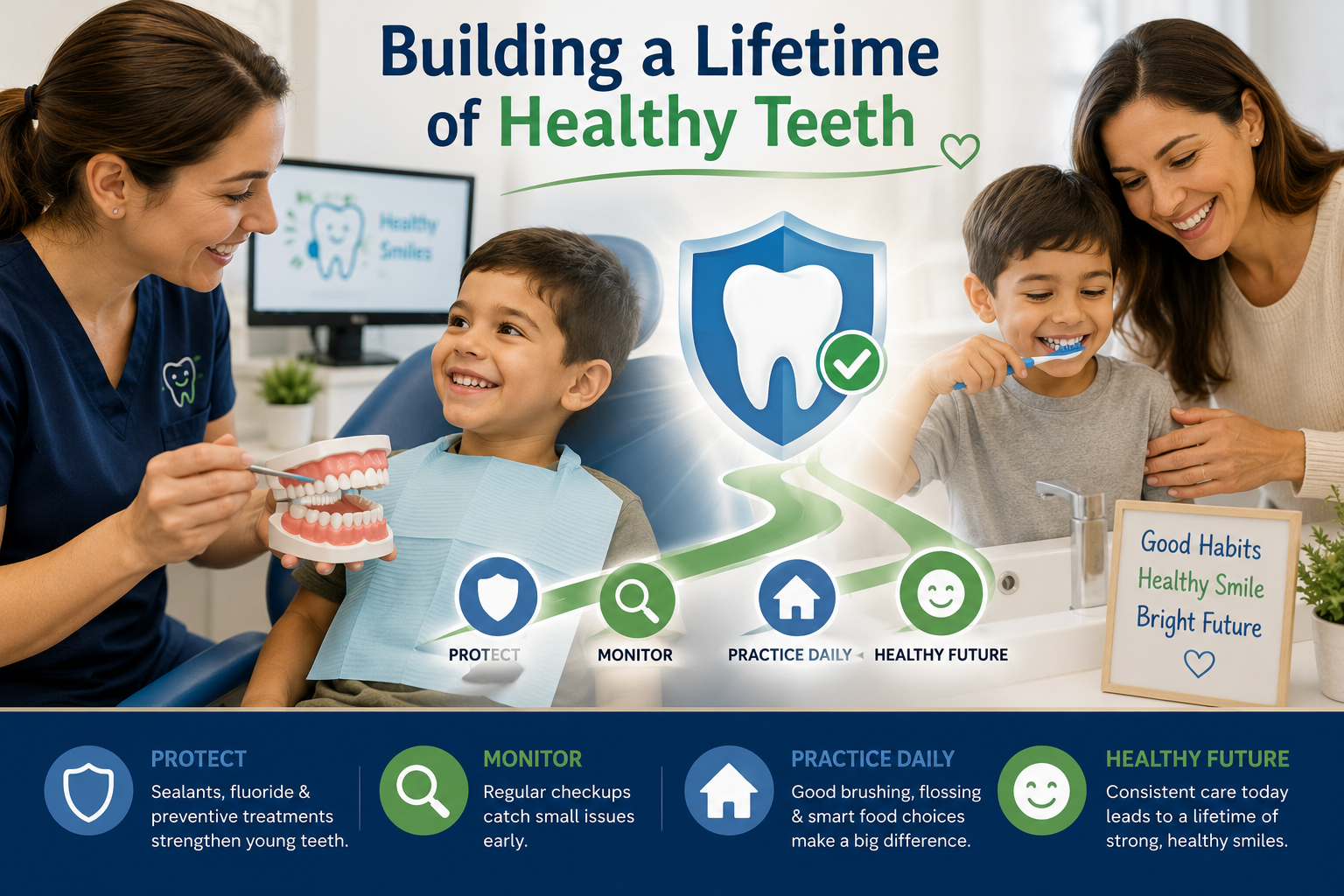
Cavity prevention in children isn’t the result of one single treatment — it’s the combination of protective procedures, close monitoring, and consistent daily habits at home. Pediatric dentists are trained to bring all three together in a way that fits a child’s age and comfort level.
Parents who stay consistent with checkups, follow through on fluoride and sealant recommendations, and reinforce good habits at home are giving their children a real head start on lifelong oral health.