
A toothache that comes and goes is annoying. A toothache that keeps you up at night, swells your jaw, or comes with a fever is something else entirely — a sign that your body is fighting an infection that needs professional attention right away.
Knowing the difference can save your tooth, and in rare but serious cases, it can save your life. This guide breaks down exactly which symptoms call for a same-day visit to an emergency dentist, which ones mean you should head straight to the ER, and how to manage your pain while you wait to be seen.
What Actually Makes a Toothache a Dental Emergency?
Not every ache qualifies as urgent. Mild, short-lived sensitivity to hot or cold usually isn’t cause for alarm and can typically wait for a regular appointment.
A toothache becomes a true emergency when it is severe, persistent, or paired with signs of a spreading infection or physical trauma. Left untreated, these situations can lead to permanent tooth loss, bone damage, or a systemic infection that puts your overall health at risk.
If you’re unsure whether your symptoms qualify, it’s always safer to call an emergency dentist and describe what you’re experiencing rather than waiting it out at home.
Red-Flag Symptoms That Call for an Emergency Dentist
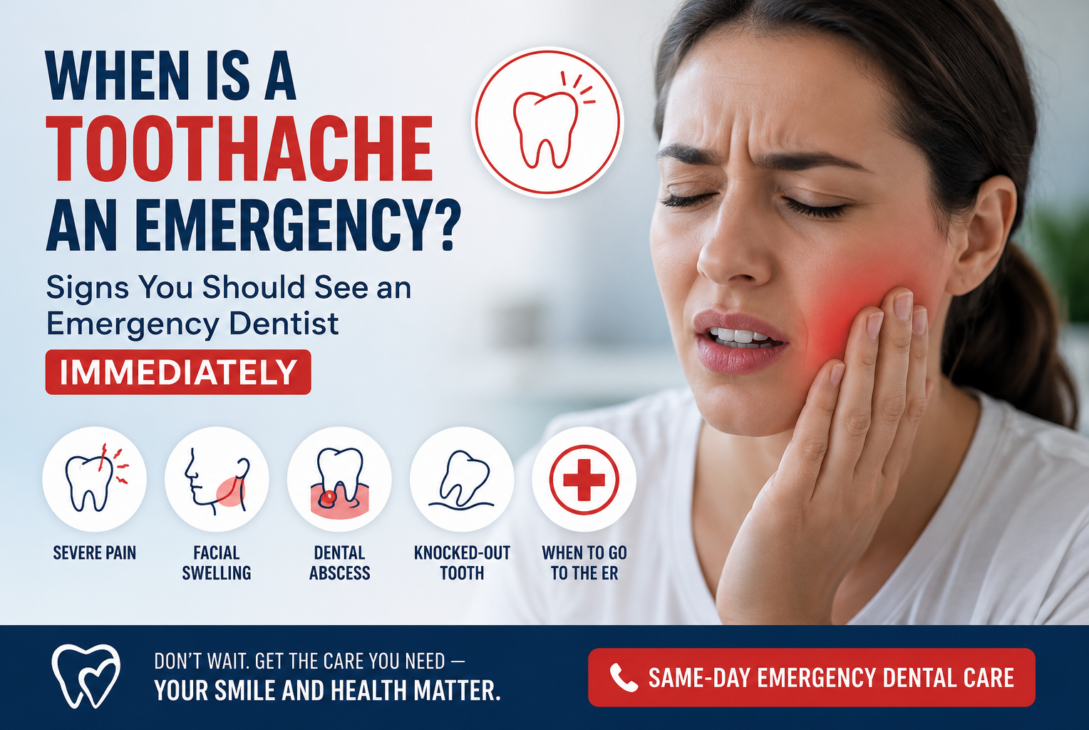
If you notice any of the following, contact an emergency dental clinic for a same-day evaluation:
Unrelenting or Throbbing Pain
Sharp, stabbing, or throbbing pain that keeps you up at night and doesn’t respond to over-the-counter pain relievers is a strong signal that something is seriously wrong beneath the surface, such as a deep infection or nerve damage.
Visible Facial or Gum Swelling
Puffiness along your gums, cheek, or jawline usually points to a localized pocket of infection. Swelling tends to worsen quickly, so don’t wait for it to go away on its own.
A Dental Abscess
A pimple-like bump on the gums that oozes pus, tastes foul, or causes persistent bad breath is a classic sign of a dental abscess. This is an active bacterial infection that needs prompt drainage and treatment.
A Knocked-Out Adult Tooth
A permanent tooth that has been completely dislodged has the best chance of being saved if you reach a dentist within 30 to 60 minutes. Keep the tooth moist — in milk or a saliva-soaked container — on the way to your appointment.
Uncontrolled Bleeding
Bleeding from the mouth or gums that doesn’t slow down after 10 to 15 minutes of firm, direct pressure needs urgent evaluation, especially after an injury or extraction.
Loose Permanent Teeth
An adult tooth that feels loose or has shifted position can indicate significant bone loss, gum disease, or trauma. Waiting can turn a savable tooth into one that eventually has to be extracted.
Critical Signs: When to Go Straight to the ER
Emergency rooms generally aren’t equipped to treat a tooth directly — most hospitals don’t have the diagnostic tools or dental specialists on staff. However, a severe oral infection can spread rapidly into the bloodstream, the airway, or even the brain.
Skip the dental office and go straight to the nearest hospital emergency department if your toothache is paired with any of the following:
- Difficulty swallowing or breathing — a sign that swelling has spread toward your throat and may be threatening your airway.
- High fever or chills — a systemic response showing the infection is moving through your bloodstream.
- Swelling near the eyes or neck — rapidly spreading inflammation that has moved beyond the jaw.
The American Dental Association and the CDC both note that untreated dental infections can, in rare cases, progress to sepsis or Ludwig’s angina, a dangerous swelling of the floor of the mouth. These situations require immediate hospital care, not a dental appointment.
Managing the Pain Until Your Appointment
If you’re waiting to be seen, these temporary first-aid steps can help you manage the discomfort in the meantime:
Apply a Cold Compress
Hold an ice pack wrapped in a cloth against the outside of your cheek for about 20 minutes at a time. This reduces blood flow to the area and helps limit swelling.
Rinse With Warm Salt Water
Swishing with a mixture of warm water and salt helps clean out loose bacteria and food debris while soothing irritated gum tissue.
Take an Over-the-Counter Pain Reliever
Anti-inflammatory medications like ibuprofen or acetaminophen, taken according to package instructions, can help control pain and swelling. Avoid placing aspirin directly against your gums — it’s acidic and can cause a chemical burn to the tissue.
These steps are meant to hold you over, not replace professional treatment. If your symptoms are worsening, don’t wait for your at-home remedies to work before calling for help.
Don’t Wait Out a Dental Emergency
A toothache is your body’s way of telling you something is wrong. When that pain is severe, won’t go away, or comes with swelling, fever, or bleeding, it’s time to stop guessing and get evaluated.
Acting quickly gives you the best chance of saving your tooth and avoiding a much bigger health problem down the road. If you’re experiencing any of the warning signs above, don’t wait for regular office hours.