
You typically do not consider your mouth until it starts hurting. It is often a toothache, bleeding gums, or sensitivity that eventually prompts one to make an appointment with the dentist. The downside is that small problems may develop into bigger ones if you wait to see whether symptoms develop.
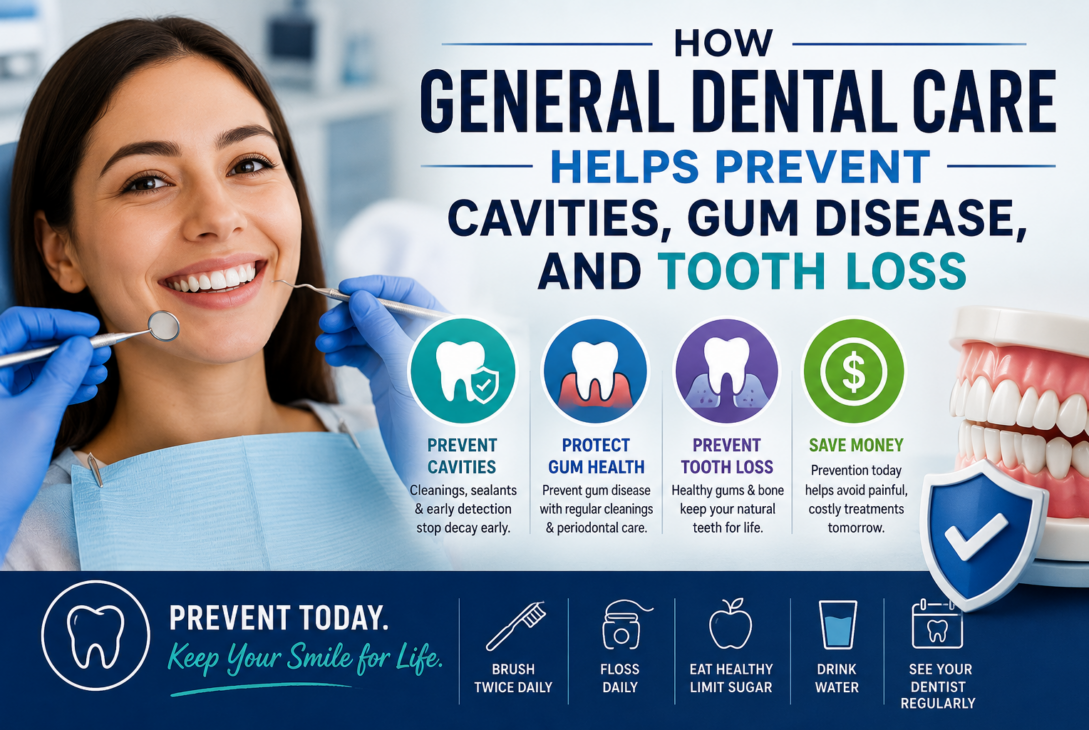
The fact of the matter is that general dental care is to address dental issues before they occur. Routine checkups, professional cleanings, and preventive treatments, such as dental sealants, help protect your teeth and gums from decay, periodontal disease, and tooth loss.
Have you ever wondered why regular dental visits are so important? Well, let me explain.
Why Prevention Matters More Than Treatment
Bacteria are in your mouth all the time. When you consume food or beverages, bacteria consume leftover food particles and also release acids that erode tooth enamel. Accumulation of plaque around the gumline increases the risk of inflammation and infection.
If nothing is done to stop it from progressing, it tends to progress in the following manner:
- Tartar forms from plaque, which then hardens, oftentimes in a matter of days.
- Decay starts to form below the enamel.
- Gums become irritated and start bleeding.
- Periodontal disease is progressive and leads to destruction of the supporting bone.
- Teeth loosen, which can fall out altogether.
The problem is that most of these changes happen quietly. Treatment becomes more complex and expensive once the discomfort arises.
It is the reason preventive dentistry focuses on identifying and preventing problems early.
While Routine Dental Visits Can Help Prevent Cavities
Cavities don’t form overnight. They develop slowly, with acids repeatedly attacking tooth enamel.
Professional Plaque and Tartar Removal
No matter how well you brush and floss, some places simply cannot be cleaned adequately. This is one of the most important parts, as many professional cleanings are necessary to remove plaque and hardened tartar (calculus) that cannot be removed at home.
Now that gets rid of the bacteria that produce decay.
Early Detection of Weak Enamel
Dentists can also detect early signs of decay before a cavity develops by spotting areas where enamel is just beginning to break down.
Most often, fluoride treatments and preventive advice can strengthen enamel and make fillings unnecessary.
Protective Sealants
Dental sealants can effectively provide a protective barrier, particularly on the chewing surfaces of molars where tooth decay is more likely to occur. These barrier coatings act as a shield, preventing food particles and bacteria from taking root in the grooves that form with wear.
Personalized Oral Hygiene Guidance
Everyone’s mouth is different. By providing custom suggestions about how to brush, when to floss, what to eat and drink, and how to manage a dry mouth, cavity risk can be reduced.
Preventative Care is Essential to Preventing Gum Disease
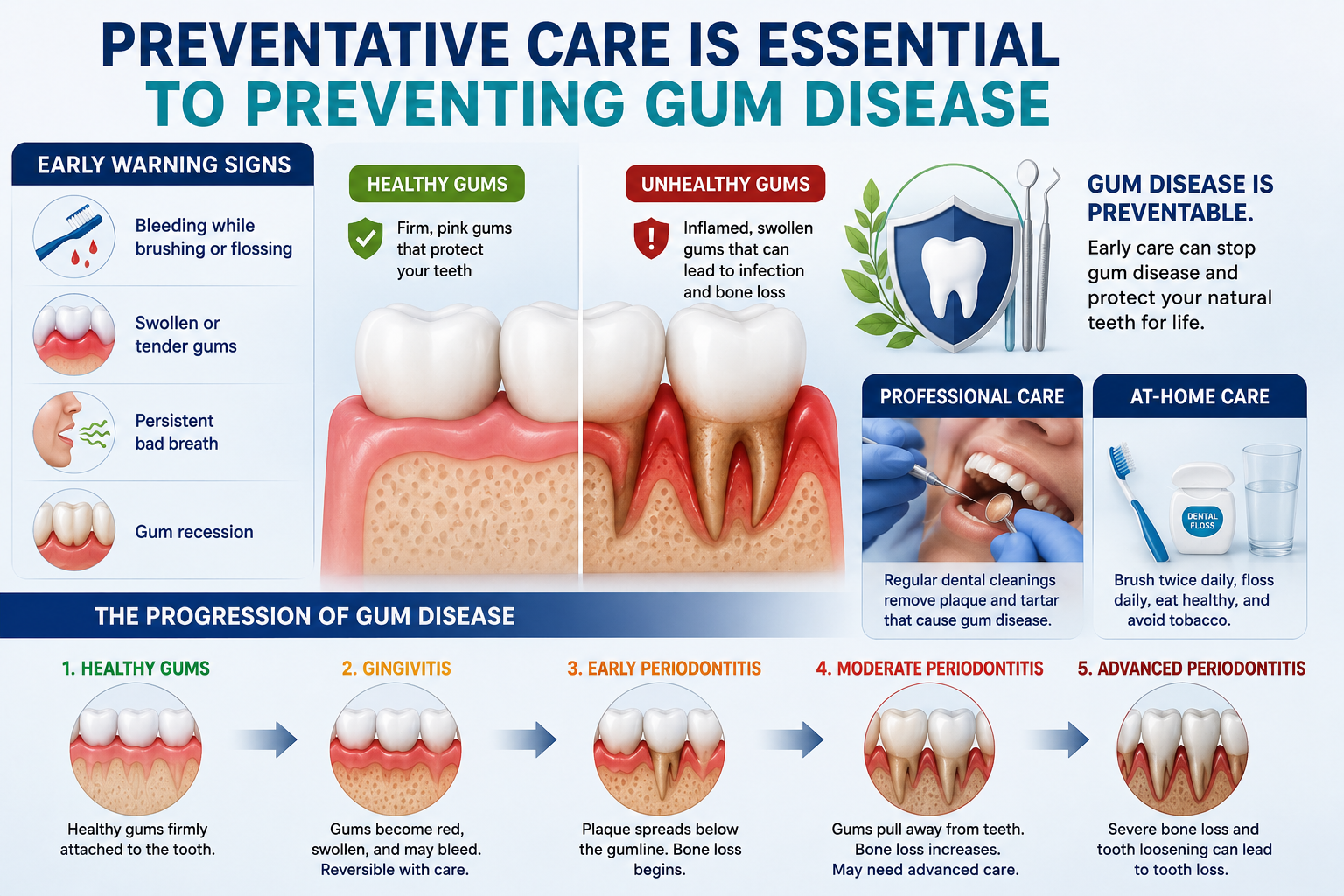
Gum disease is one of the main reasons behind tooth loss in adults. The most concerning aspect of it is that it typically does so painlessly.
Many times, with early warning signs such as:
- Bleeding while brushing or flossing
- Swollen or tender gums
- Persistent bad breath
- Gum recession
Gingivitis is the first stage of gum disease and is typically reversible with professional assistance and improved at-home care. But, depending on the stage and neglect, it leads to a more progressed periodontal disease.
Regular Periodontal Screenings
Gum health assessments form a part of routine dental visits. Dentists measure the spaces between the teeth and the gums for early signs of infection.
That means that by catching issues early, they can usually be treated with professional cleanings and improved oral hygiene practices instead of requiring surgery.
Reducing Harmful Bacteria
Because the bacteria-rich plaque and tartar that contribute to gum inflammation are removed at professional cleanings.
Preventive treatment controls the aggregation of harmful bacteria, maintaining healthy gums and protecting the bone structures which support teeth.
Monitoring Long-Term Changes
Consistent dental records allow providers to see trends over time. Moderate changes in gum health may be detected just before major damage occurs.
This proactive stance is key to maintaining natural dentition.
The Significance of Preventive Dentistry in Saving Natural Teeth
Tooth loss is just one of those things we think: Ok, it’s part of getting older. In practical terms, most lost teeth result from untreated decay, advanced gum disease, or other dental problems.
There are several key ways preventive care protects your natural teeth.
Treating Small Problems Early
A small cavity is a fast and cheap fix. Untreated, that same cavity could later require a root canal, a crown, or an extraction.
Early intervention preserves more natural tooth structure and averts more serious complications.
Protecting the Supporting Bone
The security of teeth depends on healthy gums and bone. Bone loss from advanced gum disease can be prevented with routine cleanings and periodontal examinations.
Creating a Strategy for the Future of Oral Health
Regular dental check-ups, however, can reveal a lot about your oral health over time. Adequate monitoring enables professionals to identify patterns, pinpoint risks, and then suggest preventive measures before major issues arise.
The Financial Benefits of Prevention
In fact, preventive dental services usually cost much less than emergency care.
Consider the difference:
- Exams and cleanings turn out to be great protection against huge issues.
- Less expensive than root canals and crowns; in fact, small fillings are cheaper.
- Deal with early gum disease now; it’s cheaper than advanced periodontal therapy later.
- If you can maintain your teeth, there is no need for expensive and most importantly, prosthetic tooth replacement choices.
Preventive care is cheaper than retrospective appointment expenses, so pay through preventive patient care today to avoid hefty treatment bills later.
Creating Habits to Keep Your Mouth Healthy for Life
The fact is, you can preserve a healthy smile without complex practices. Consistency is what matters most.
Now, here are some simple habits that support long-term oral health:
- Daily brushing (twice with fluoride toothpaste)
- Flossing every day
- Limiting sugary foods and beverages
- Drinking plenty of water
- Avoiding tobacco products
- Regular dental checkups and cleanings
All these habits combine to safeguard your teeth and gums for years to come.
FAQ
How often ought I to go to a dentist?
The majority of people do not need more than professional examinations and cleanings every 6 months. However, people who have higher risk factors may need more frequent visits.
Can cavities be prevented completely?
There is no method that 100% guarantees your teeth will not get cavities. Still, regular cleanings, using fluoride toothpaste, proper oral hygiene, and a diet low in cavity-causing bacteria have been shown to significantly reduce the risk of developing a cavity.
Is bleeding when flossing normal?
Bleeding during flossing will happen from time to time if your floss game is weak, but continuous bleeding is usually the first sign of gum inflammation and should be addressed by a dentist.
Can gum disease be reversed?
The initial stage, known as gingivitis, is reversible with professional help and improved home oral hygiene. Later stages of the disease also require continuous treatment to maintain proper function.
If nothing hurts, why do I need to have a routine dental exam?
Many dental problems develop silently. Regular examinations enable professionals to identify problems before they become painful, expensive, or hard to treat.
Be Proactive About Your Smile
Dental treatment is even better when it includes prevention. Ultimately, regular checkups, professional cleanings, and proactive oral health habits prevent decay and help control gum disease, so your natural teeth can be protected for a lifetime. With preventive care, you can have a healthier smile, lower treatment costs for years to come, and feel more confident!