
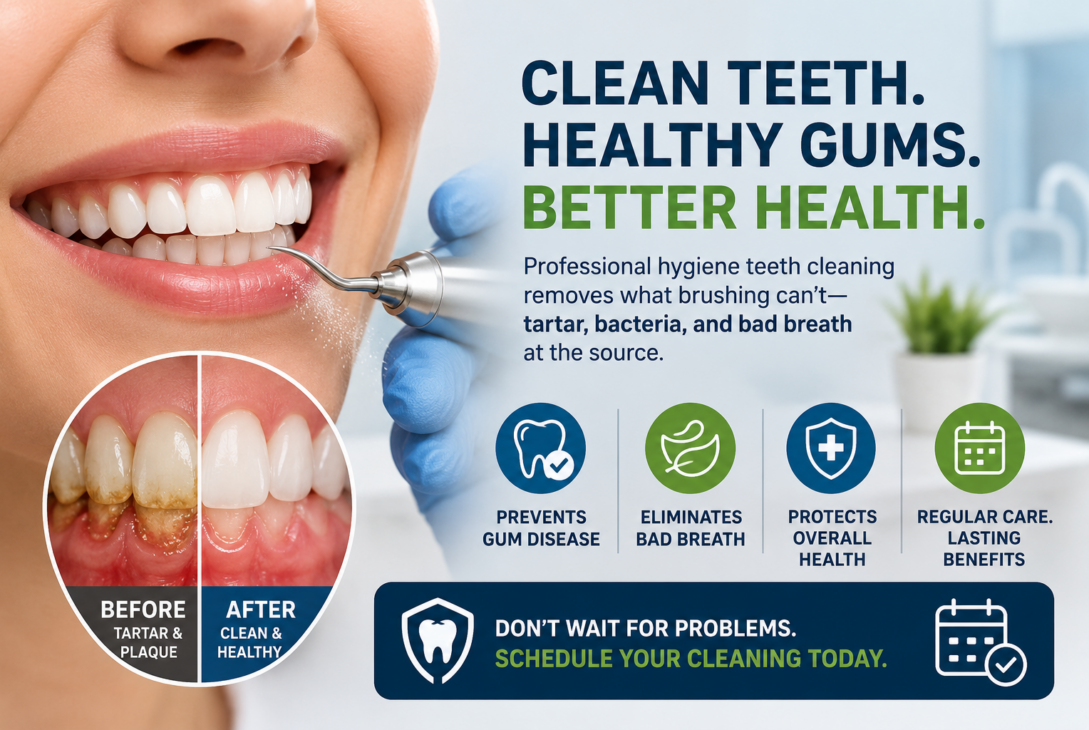
You brush twice a day and floss regularly, yet you might notice bleeding gums or a bad taste that just won’t go away. Why does this happen? The truth is that even the most diligent home routines cannot remove every type of bacteria from your mouth.
Within 24 to 48 hours, the sticky film on your teeth hardens into a cement-like substance called tartar. Once this happens, your toothbrush becomes useless against it. This is where hygiene teeth cleaning becomes your strongest ally.
Professional cleanings do more than just polish your smile; they are a direct intervention to stop gum disease in its tracks and eliminate the root causes of halitosis (bad breath). Here is why making regular visits to your dental hygienist is essential for your oral health.
The Invisible Enemy: Plaque and Tartar
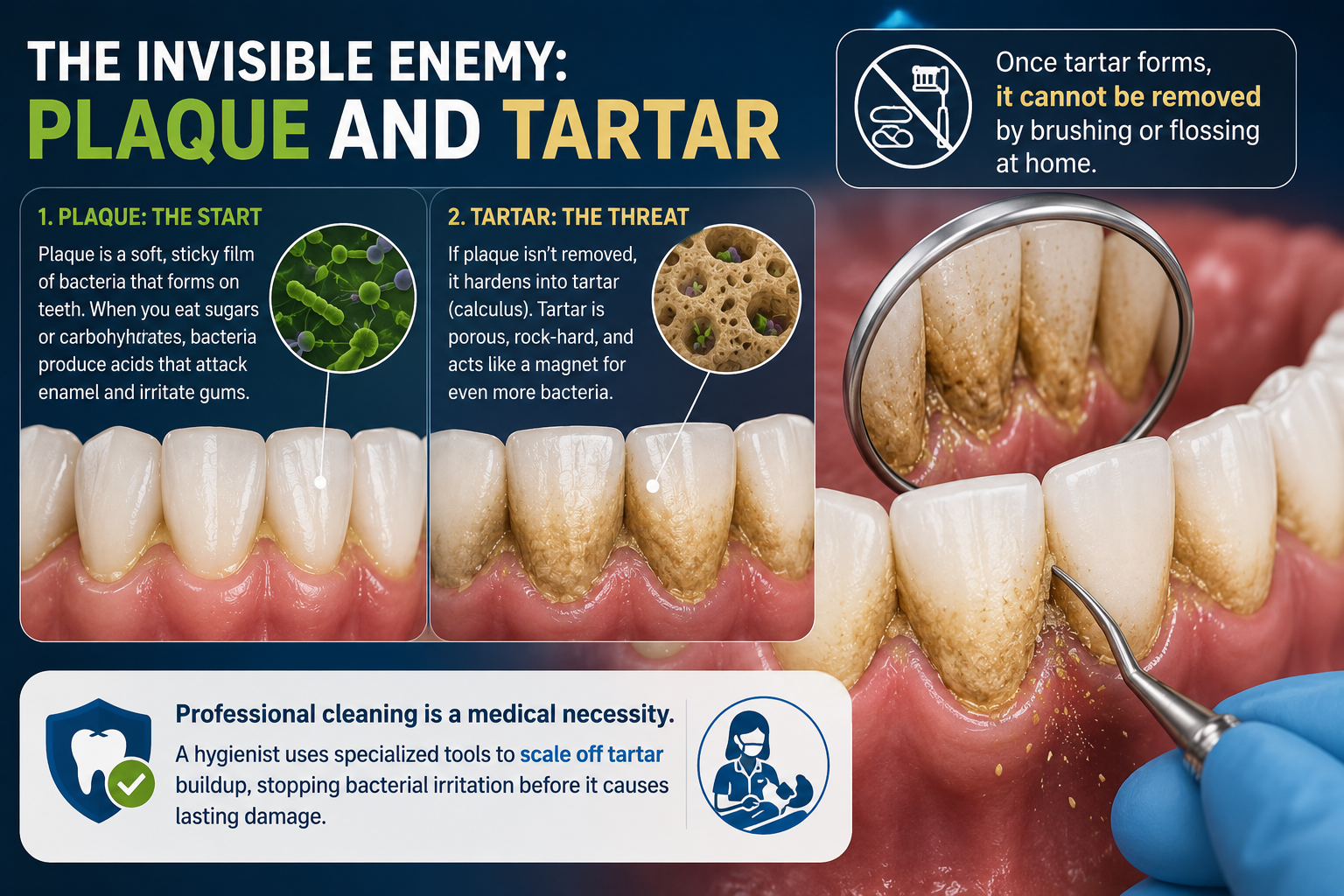
To understand why professional cleaning is necessary, you first have to understand the enemy. Plaque is a soft, sticky film of bacteria that constantly forms on your teeth . When you eat sugars or carbohydrates, these bacteria produce acids that attack the enamel and irritate your gums.
If plaque is not removed thoroughly every day, it hardens into tartar (also called calculus) . Unlike plaque, which is sticky but removable, tartar is porous and rock-hard. It acts like a magnet for even more bacteria.
According to the Cleveland Clinic, once tartar forms, it cannot be removed by brushing or flossing at home . This is why hygiene teeth cleaning is a medical necessity, not just a cosmetic luxury. A hygienist uses specialized tools to scale off this buildup, stopping the bacterial irritation before it causes lasting damage.
Gum Disease Prevention: Stopping Gingivitis and Periodontitis
Gum disease is progressive. It starts silently, often without pain, but the consequences can lead to tooth loss.
Reversing Gingivitis
The earliest stage of gum disease is gingivitis, marked by red, swollen, or bleeding gums. The good news is that gingivitis is reversible. Regular hygiene teeth cleaning removes the irritants causing the inflammation, allowing your gums to heal and return to a healthy, pink state .
Halting Periodontitis
If gingivitis is left untreated, it advances to periodontitis. At this stage, the inner layer of the gum and bone pulls away from the teeth, forming “pockets” that collect debris. This can destroy the bone that supports your teeth .
Research from the University of Vermont Health Network confirms that removing bacteria and tartar through professional care is crucial to prevent these deep pockets and halt the progression of the disease .
Fresh Breath: Eliminating Sulfur Compounds
Approximately 50% to 65% of the population suffers from bad breath, and up to 90% of these cases originate in the mouth, not the stomach . The primary cause is the breakdown of food particles by bacteria, which releases foul-smelling chemicals known as Volatile Sulfur Compounds (VSCs) .
Targeting the Source
You cannot mask these gases with mouthwash alone. You have to physically remove the bacteria producing them. These odor-causing bacteria love to hide in places you can’t see, specifically under the gum line and deep between teeth.
Professional hygiene teeth cleaning physically removes the colonies of these bacteria and the food debris they feed on. By eliminating the biological factory producing the sulfur gases, a cleaning restores fresh breath at the source.
What to Expect During a Professional Cleaning
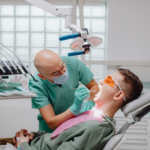
Understanding the process can alleviate anxiety and help you appreciate the value of the visit. A standard hygiene visit usually involves two key steps:
1. Scaling: The hygienist uses an ultrasonic scaler and hand instruments to scrape away tartar from above and below the gum line .
2. Polishing: Once the teeth are free of deposits, a gritty paste is used to polish the surfaces. This smooths the enamel, making it harder for new plaque to stick to the teeth before you leave the office .
The Connection to Overall Health
Your mouth is a window to your health. The bacteria involved in gum disease don’t just stay in your mouth. The Mayo Clinic notes that oral inflammation and germs may play a role in systemic conditions, including heart disease, clogged arteries, and complications with diabetes management .
By investing in regular hygiene teeth cleaning, you aren’t just saving your smile; you may be reducing your risk of serious cardiovascular issues and helping your body manage chronic inflammation more effectively.
Conclusion and Call to Action
Daily brushing and flossing are your first line of defense, but they cannot win the war alone. Tartar buildup is inevitable, and the bacteria it harbors lead to bleeding gums, persistent bad breath, and eventually, tooth loss.
Don’t wait for pain or bleeding to remind you about your oral health. The proactive approach is the cheapest and least invasive path.