
Your mouth rarely breaks down one tooth at a time. Decay, wear, gum disease, and old dental work often fail together, and by the time you notice the problem, several systems are already struggling to keep up.
That is where full mouth reconstruction comes in. It is not a single procedure but a personalized treatment plan that rebuilds your teeth, gums, and bite as one connected system.
Knowing the warning signs early can help you avoid years of discomfort, costly emergency visits, and further damage to your oral health.
What Is Full Mouth Reconstruction?
Full mouth reconstruction combines restorative and sometimes cosmetic treatments to rebuild every damaged part of your mouth. A dentist may use crowns, bridges, implants, veneers, and gum therapy together in one coordinated plan.
Unlike a routine filling or single crown, this approach treats your bite, jaw joints, and supporting tissue as interconnected. The goal is a mouth that functions comfortably, not just one that looks repaired tooth by tooth.
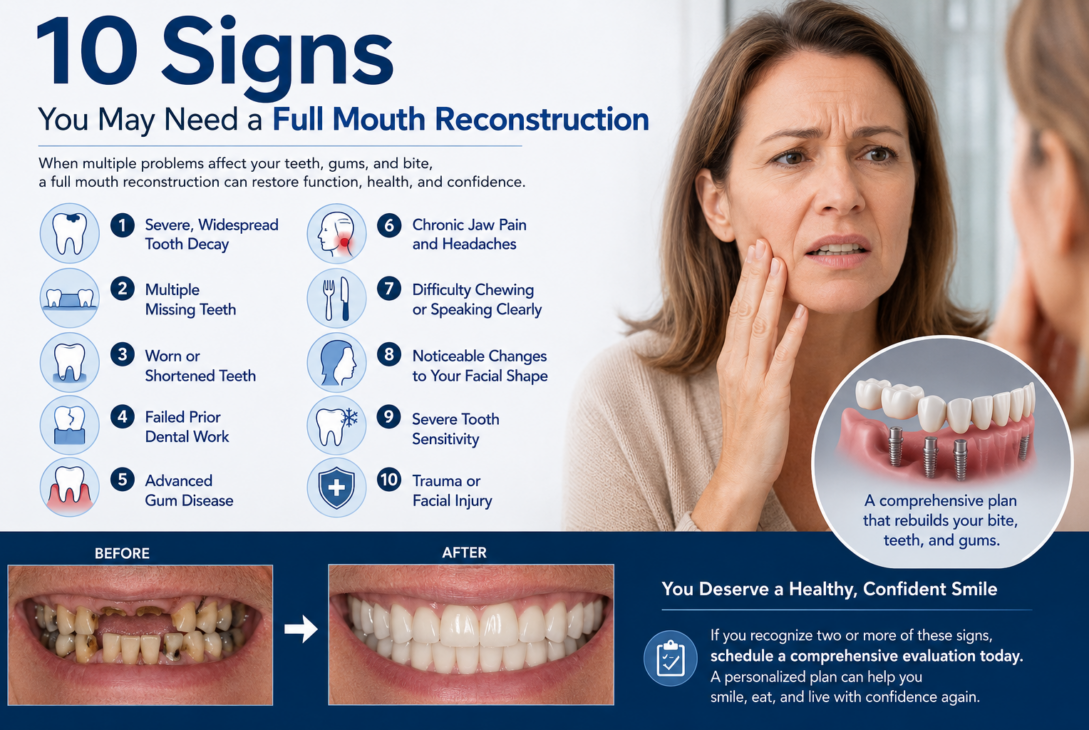
10 Signs You May Need a Full Mouth Reconstruction
1. Severe, Widespread Tooth Decay
A cavity or two is manageable with a standard filling. Decay across several teeth is a different story.
When decay spreads through multiple teeth at once, it weakens the structural integrity of your entire bite. Fillings and single crowns can no longer keep up with the damage.
2. Multiple Missing Teeth
Losing one tooth is a problem. Losing several sets off a chain reaction.
Neighboring teeth begin to drift into open spaces, your bite shifts, and the remaining teeth take on pressure they were never meant to handle. This instability is a common reason patients pursue full mouth reconstruction.
3. Worn or Shortened Teeth
Years of grinding, clenching, or acid erosion gradually flatten your biting surfaces. Over time, teeth appear shorter, and the protective enamel wears thin.
Worn teeth are more than a cosmetic issue. They change how your jaw closes and can lead to further breakdown if left untreated.
4. Failed Prior Dental Work
If crowns, bridges, or fillings keep cracking, loosening, or falling out, the problem usually is not the material. It is the foundation underneath.
Repeated failures often point to an unstable bite that keeps placing uneven stress on restorations, no matter how many times they are replaced.
5. Advanced Gum Disease
Severe periodontitis does more than irritate your gums. It destroys the bone that holds your teeth in place.
As supporting bone breaks down, teeth loosen and drift out of position. At this stage, restoring your bite usually requires addressing the gum disease alongside the teeth themselves.
6. Chronic Jaw Pain and Headaches
A misaligned bite forces your jaw muscles and temporomandibular joint (TMJ) to overcompensate. That strain often shows up as facial tension, jaw clicking, or recurring headaches.
If you have already ruled out other causes, your bite alignment may be the underlying issue.
7. Difficulty Chewing or Speaking Clearly
Missing or damaged teeth change the mechanics of your mouth. Chewing certain foods becomes uncomfortable, and some patients notice a shift in how clearly they speak.
These functional changes are a strong signal that multiple areas of your mouth need support, not just one tooth.
8. Noticeable Changes to Your Facial Shape
Significant tooth loss affects more than your smile. It can shorten the distance between your nose and chin and give your lower face a sunken appearance.
This happens because your teeth and jawbone provide structural support for the surrounding facial tissue. Losing that support changes your profile over time.
9. Severe Tooth Sensitivity
Occasional sensitivity to hot or cold is common. Sharp, widespread sensitivity across multiple teeth is not.
This level of discomfort usually points to extensive enamel loss or exposed tooth roots, both of which are common in patients who eventually need comprehensive restorative care.
10. Trauma or Facial Injury
A high-impact accident, sports injury, or fall can fracture multiple teeth, damage tooth roots, and injure the jawbone all at once.
Because trauma rarely affects just one tooth, rebuilding the mouth after a serious injury often calls for a full reconstruction rather than isolated repairs.
Why a Combination of Symptoms Matters
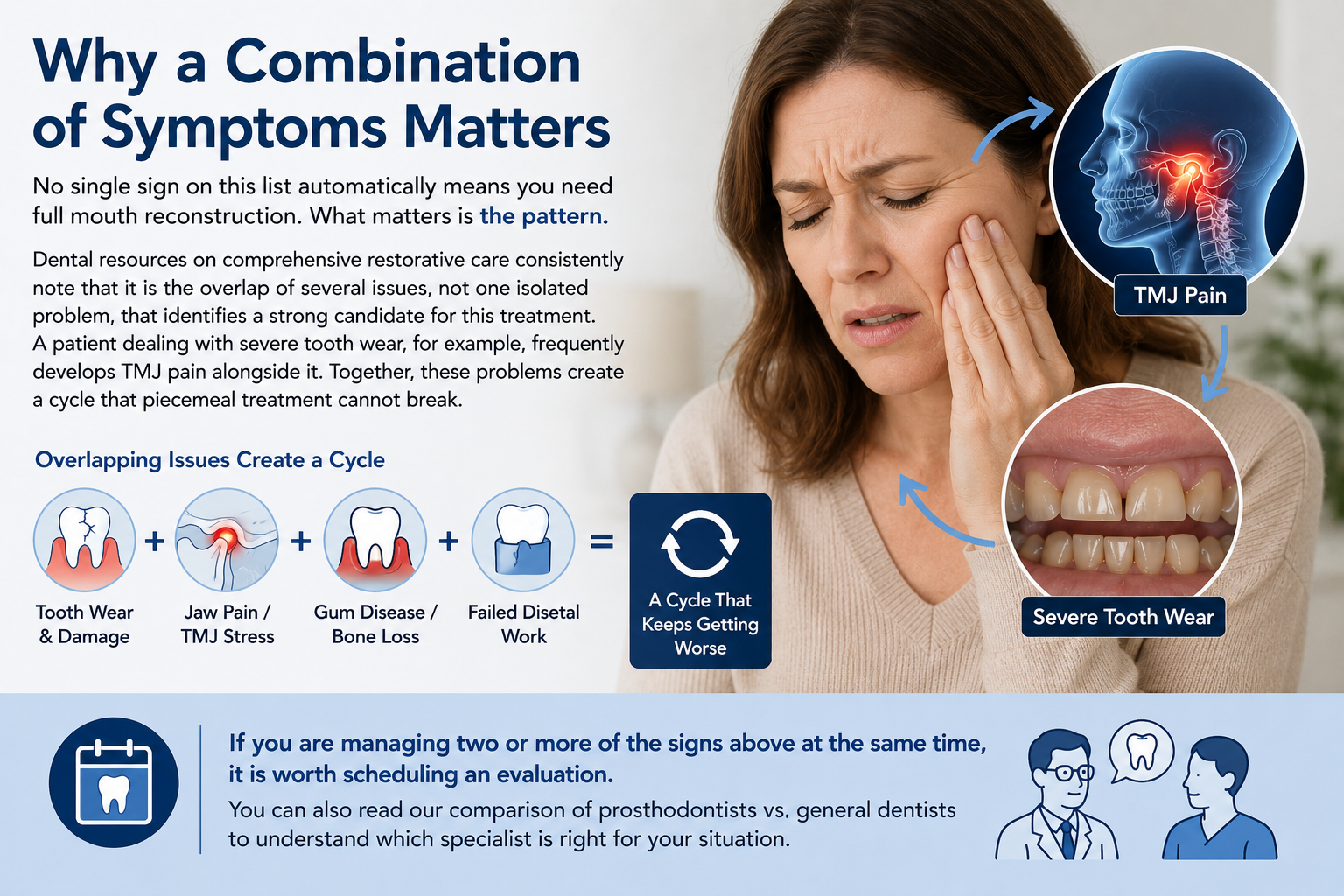
No single sign on this list automatically means you need full mouth reconstruction. What matters is the pattern.
Dental resources on comprehensive restorative care consistently note that it is the overlap of several issues, not one isolated problem, that identifies a strong candidate for this treatment. A patient dealing with severe tooth wear, for example, frequently develops TMJ pain alongside it. Together, these problems create a cycle that piecemeal treatment cannot break.
If you are managing two or more of the signs above at the same time, it is worth scheduling an evaluation. You can also read our comparison of prosthodontists versus general dentists to understand which specialist is right for your situation.
What to Expect From a Full Mouth Reconstruction Consultation
A thorough evaluation typically includes a full examination of your teeth, gums, jaw joints, and bite alignment. Many dentists also use digital scans or X-rays to assess bone health and identify problems that are not visible to the naked eye.
From there, your dentist builds a phased treatment plan. Depending on your needs, this may include periodontal therapy, implants, crowns, or orthodontic adjustments, sequenced in the order that best supports long-term stability.
Organizations like the American College of Prosthodontists and the American Dental Association offer additional guidance on restorative treatment options if you want to research further before your appointment.
Take the Next Step Toward a Healthier Smile
Living with ongoing dental pain, instability, or embarrassment about your smile takes a toll well beyond your mouth. The signs above are your body’s way of signaling that isolated fixes are no longer enough.
A full mouth reconstruction offers a coordinated path back to comfortable chewing, clear speech, and a confident smile. The sooner you address these warning signs, the more treatment options you typically have available.
If two or more of these signs sound familiar, schedule a comprehensive dental evaluation today. A personalized assessment is the best way to find out whether full mouth reconstruction is right for you.